

A Warm Hug in a Bowl: The Lancashire Hotpot Story
There’s something magical about a dish that’s been warming hearts for over two hundred years. The Lancashire hotpot isn’t just any lamb stew. It’s a piece of Northern England’s soul, served in a bowl. This traditional northern English lamb stew tells the story of working families who needed hearty, filling meals that could cook slowly while they toiled in the cotton mills.
You know what’s funny? The simplicity of this dish is exactly what makes it so special. It doesn’t try to be fancy. It’s honest comfort food at its absolute best. And the best part? It’s naturally gluten-free and dairy-free, making it perfect for modern dietary needs without sacrificing any of that rich, traditional flavour.
If you’ve never made a proper lamb hotpot before, you’re in for a treat. This isn’t complicated cooking. It’s the kind of recipe your great-grandmother would recognise immediately. And trust me, once you’ve made it once, you’ll understand why it’s stood the test of time.
What Makes Lancashire Hotpot Different from Other Stews?
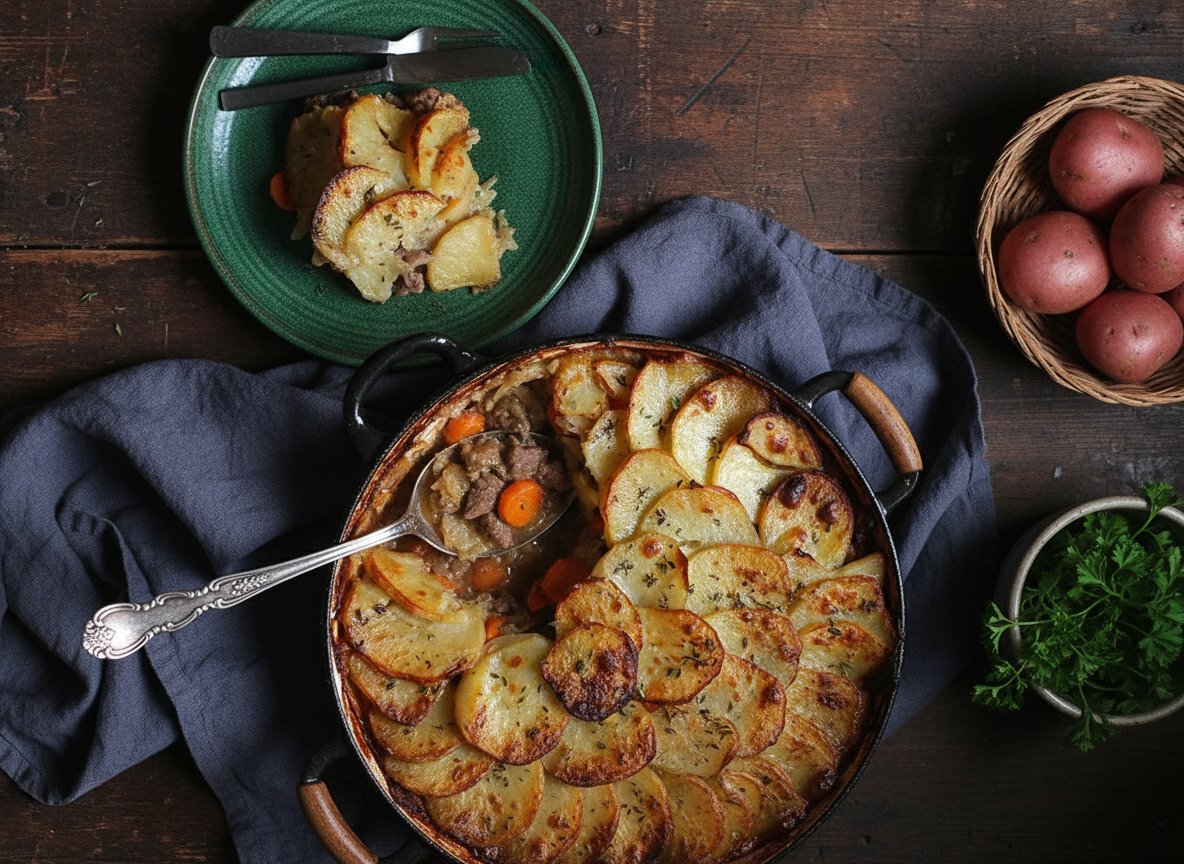
Let’s clear something up right away. A Lancashire hotpot recipe isn’t just another British regional stew. It has a signature look and taste that set it apart. The defining feature? Those beautiful sliced potatoes on top, layered like roof tiles, are getting crispy and golden while everything underneath becomes meltingly tender.
Most stews hide everything under a pastry crust or keep it all mixed together. Not this one. The lamb hotpot celebrates its ingredients. You’ll see those potato layers proudly sitting on top, telling you exactly what you’re about to enjoy. It’s rustic. It’s beautiful. It’s utterly delicious.
The original version came from Lancashire, a county in northwest England known for its textile industry. Workers needed something that could cook all day without attention. They needed high-protein meals that would fuel long shifts. This dish delivered exactly that. It still does.
The Essential Ingredients for Your Lamb Hotpot
Here’s what you’ll need to create this northern English stew masterpiece. Don’t worry, the ingredients are straightforward and easy to find. That’s part of the charm.
The Main Players
- 900g lamb neck or shoulder, cut into chunks (bone-in adds more flavour)
- 1kg potatoes, peeled and sliced about 3mm thick
- 2 large onions, sliced
- 2 large carrots, sliced
- 500ml lamb or beef stock
- 2 tablespoons vegetable oil or beef dripping
- Fresh thyme (a few sprigs)
- 2 bay leaves
- Salt and black pepper to taste
That’s it. No fancy ingredients. No exotic spices. Just good, honest food that works. The beauty of this Lancashire hotpot recipe is that each ingredient has a job to do, and they all work together perfectly.
Some folks like to add a splash of Worcestershire sauce for depth. Others throw in some pearl barley for extra texture. These are nice touches, but they’re optional. The classic version stands strong on its own.
Step-by-Step: Making Your Traditional Lancashire Hotpot
Ready to get cooking? This is where the magic happens. The process is simple, but there are a few tricks that’ll make your lamb hotpot absolutely sing.
Preparing Your Ingredients
First things first. Preheat your oven to 160°C (320°F). You’ll need a heavy casserole dish with a lid, ideally one that holds about 2.5 litres. Cast iron works beautifully, but any ovenproof dish will do the job.
Slice your potatoes as evenly as possible. This matters more than you might think. Even slices cook evenly, and that top layer needs to crisp up uniformly. A mandoline makes quick work of this, but a sharp knife and a steady hand work just fine.
Season your lamb pieces generously with salt and pepper. Don’t be shy here. This is comfort food, remember? It needs proper seasoning to really shine.
Building the Layers
Heat your oil or dripping in a large frying pan over medium-high heat. Brown the lamb pieces in batches. You’re not cooking them through, just getting some colour on the outside. This step adds so much flavour to your northern English stew. It takes about 8-10 minutes total.
Now comes the fun part. Layer half your onions in the bottom of your casserole dish. Add the carrots next. Then nestle in all that lovely browned lamb. Tuck in the thyme sprigs and bay leaves. Season again with a bit more salt and pepper.
Add the remaining onions on top of the lamb. Then comes the potato layer. This is where you can get a bit artistic. Overlap your potato slices in neat circles, working from the outside in. Each slice should overlap the previous one by about half. Keep going until the entire surface is covered.
Pour your stock gently down the side of the dish. You don’t want to disturb those beautiful potato layers you just arranged. The liquid should come about three-quarters of the way up, but shouldn’t cover the potatoes completely.
The Long, Slow Cook
Brush the top layer of potatoes with a little oil. Season with a final pinch of salt. Cover tightly with the lid or a double layer of foil. This lamb hotpot needs to braise gently for about two hours.
After two hours, remove the lid. Turn the oven up to 200°C (390°F). Let it cook for another 30-40 minutes uncovered. This is when those potatoes transform into golden, crispy perfection. Watch them towards the end. You want deep golden brown, not burnt.
The smell in your kitchen right now? That’s what home is supposed to smell like. Rich, savoury, utterly inviting. Your house will smell amazing for hours.
Why This British Regional Classic Never Goes Out of Style
You might wonder why people still make this dish when we’ve got every cuisine imaginable at our fingertips. The answer’s simple. Some things just work. This traditional northern English lamb stew hits every comfort food note perfectly.
It’s naturally high protein, thanks to all that tender lamb. The potatoes provide slow-burning energy. The onions and carrots add sweetness and nutrients. Everything cooks down into this rich, savoury gravy that makes you want to lick the bowl clean.
And here’s something people don’t always realise: it’s naturally gluten-free and dairy-free. No modifications needed. For folks with dietary restrictions, that’s gold. You can serve this to anyone without worry.
Serving Your Lancashire Hotpot
This dish is a complete meal in itself, but tradition calls for a few simple accompaniments. A jar of pickled red cabbage is classic. The sharp, vinegary crunch cuts through the richness beautifully. Some crusty bread for mopping up that gravy doesn’t hurt either.
In the north of England, you’ll often see this served with pickled beetroot too. It’s all about those sharp, acidic contrasts that balance the rich lamb and potatoes. Simple green vegetables work wonderfully as well. Think peas or green beans, nothing fancy.
Serve it straight from the dish at the table. Let everyone see those gorgeous golden potatoes before you break through to the tender lamb underneath. It’s theatre and dinner all in one.
Making It Your Own
Once you’ve mastered the basic Lancashire hotpot recipe, feel free to experiment. Some cooks add kidneys alongside the lamb for a richer flavour. Others throw in some mushrooms for earthiness. Black pudding isn’t traditional, but it’s become a popular addition in some restaurants.
You can use mutton instead of lamb if you can find it. The flavour’s stronger and more distinctive. That’s actually closer to what the original would have used. Mutton takes a bit longer to become tender, so add another 30 minutes to your cooking time.
The key is respecting the basic structure. Keep those potatoes on top. Keep the cooking slow and gentle. Everything else is just details. This lamb stew is forgiving and flexible within those boundaries.
Tips for the Perfect Hotpot Every Time
Here’s what I’ve learned from making this dish dozens of times. First, don’t rush the browning stage. Those caramelised bits add incredible depth. Second, resist the urge to stir it halfway through cooking. Trust the process. Let it do its thing.
Use waxy potatoes rather than floury ones for the top layer. They hold their shape better and crisp up more reliably. Maris Piper or Yukon Gold work brilliantly. Save the floury varieties for mash.
If your potatoes aren’t crisping up enough at the end, stick the whole dish under a hot grill for a few minutes. Keep a close eye on it, though. The line between golden and burnt is thinner than you think.
Leftovers and Storage
This British regional comfort food keeps beautifully. Store it covered in the refrigerator for up to three days. The flavors actually deepen and improve overnight.Reheat gently in a moderate oven, covered for the first 20 minutes, then uncovered to re-crisp those potatoes.
You can freeze portions as well, but the potato texture may soften slightly. It’s still delicious, just not quite as crispy on top. Freeze in individual portions for convenient weeknight dinners later.
Honestly though, leftovers are rarely a problem with this dish. It disappears fast. There’s something about that combination of tender lamb, soft vegetables, and crispy potatoes that keeps people coming back for more.
Conclusion
The Lancashire hotpot is more than just a dish; it’s a traditional dish and a connection to generations of families in Northern England who recognized that great food can be wonderfully simple.
So, would you try making it this weekend?
