In February 2016 I was standing in a petrol station forecourt outside Aberdeen at six in the morning, filling a hire car, reading a local paper headline about another round of North Sea redundancies. Brent had just touched 27 dollars. Half the people I was there to interview for a completely unrelated project had lost their jobs. I remember thinking that nobody would ever want to own an oil company again.
That was, of course, almost exactly the bottom. I did not buy. I spent the next five years watching the sector I had written off produce some of the best total returns in the market. The lesson stuck harder than any win would have: in energy, the moment the story feels permanently dead is usually the moment the cash flow is about to get very good.

The 2026 thesis in one sentence
Oil demand is flat to slightly growing, supply discipline is holding, and electricity demand is rising for the first time in twenty years. That combination means the sector can generate serious free cash flow without needing a price spike, and it means the best returns may come from the power side rather than the barrel side.
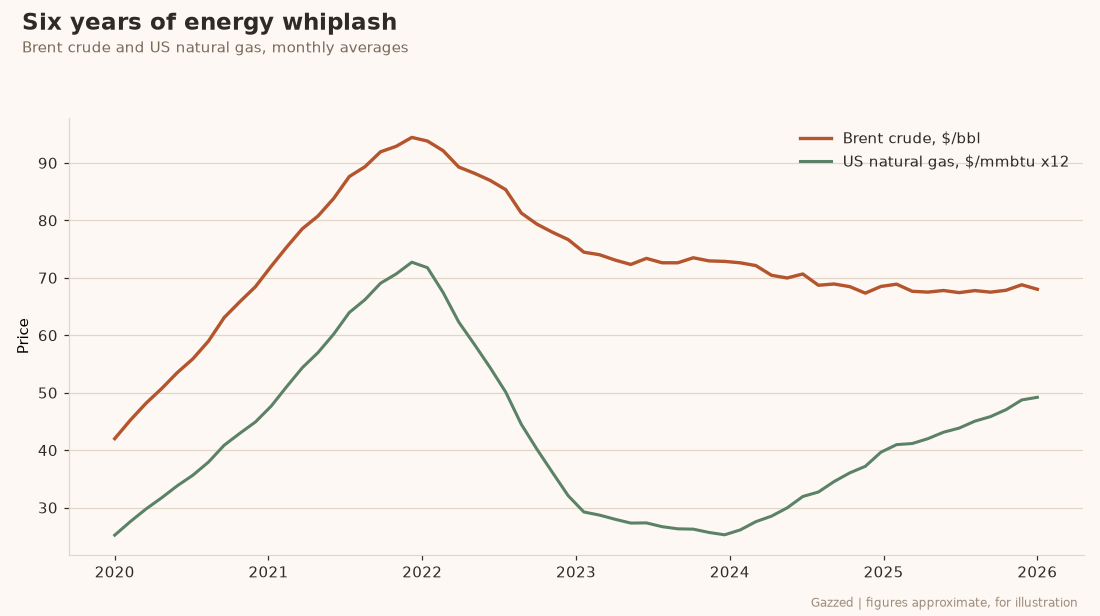
Look at what happened to corporate behaviour rather than the price line itself. The majors now plan around 55 to 60 dollar Brent. Everything above that goes to dividends, buybacks and debt reduction rather than new drilling. That is why free cash flow yields have stayed strong even as the oil price drifted lower from the 2022 peak.
The part most investors are still underweighting
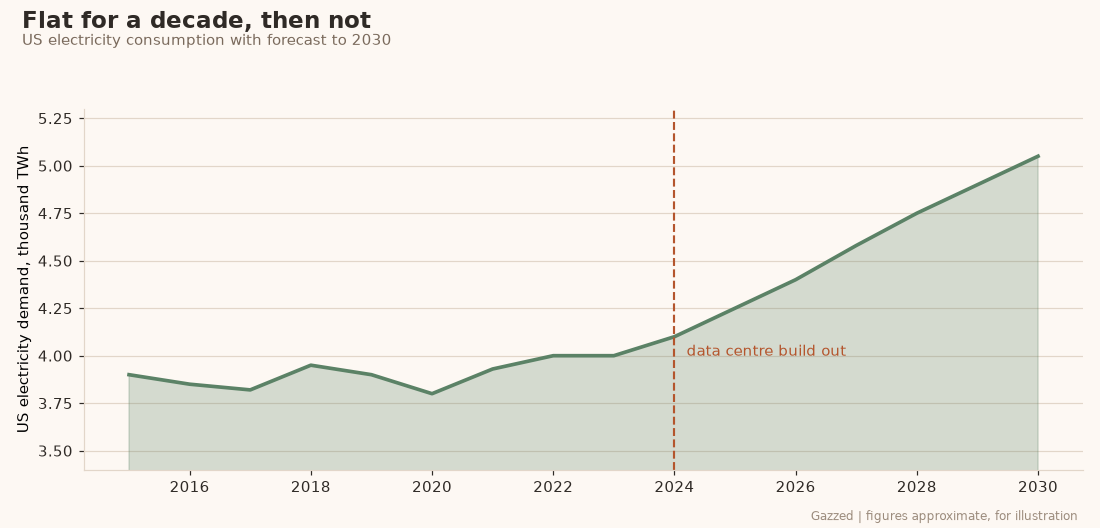
American electricity demand barely moved for a decade because efficiency gains offset growth. Then came the data centre build out, electrified manufacturing and the slow return of heavy industry. Utilities that spent fifteen years managing decline are now writing capital plans they could not have justified in 2019. Regulated utilities earn a return on their rate base, so a bigger rate base means a bigger earnings base, approved by regulators, indexed to inflation, paid out as dividends.
That is the least glamorous good idea in the market right now, and it is why two utilities appear on a list of energy stocks.
Eight energy stocks, fundamentals side by side
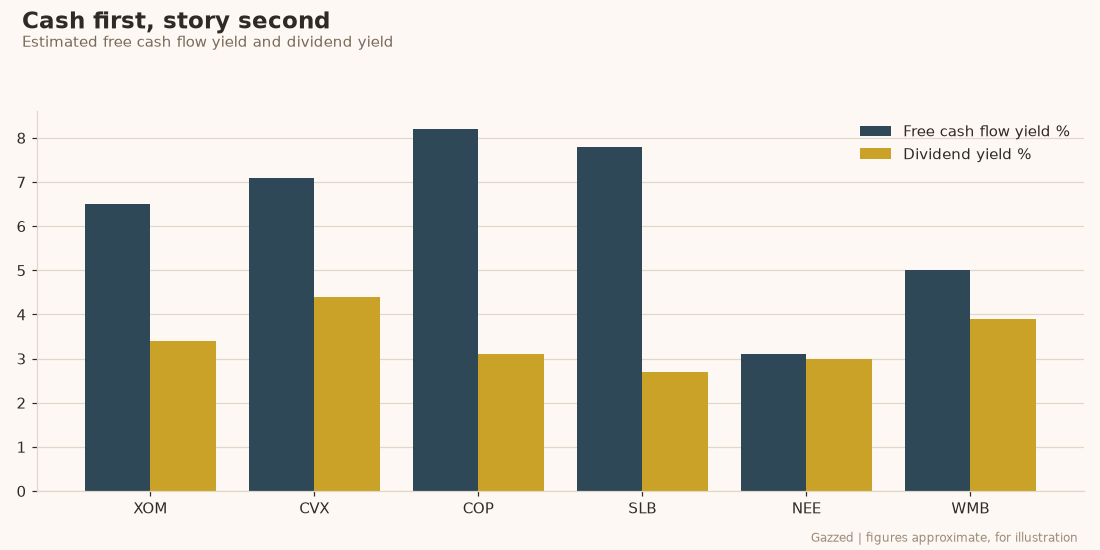
| Ticker | Type | Dividend yield | FCF yield | Net debt / EBITDA | My range |
|---|---|---|---|---|---|
| XOM | Integrated major | 3.4% | 6.5% | 0.5x | Add under 105, trim over 150 |
| CVX | Integrated major | 4.4% | 7.1% | 0.7x | Add under 140, trim over 190 |
| COP | US shale and LNG | 3.1% | 8.2% | 0.6x | Add under 90, trim over 135 |
| SLB | Oilfield services | 2.7% | 7.8% | 1.3x | Add under 38, trim over 62 |
| WMB | Natural gas pipelines | 3.9% | 5.0% | 3.6x | Add under 52, trim over 75 |
| NEE | Regulated utility plus renewables | 3.0% | 3.1% | 4.4x | Add under 62, trim over 95 |
| CEG | Nuclear generation | 0.6% | 4.0% | 2.1x | Add under 190, trim over 340 |
| SHEL | European major and LNG | 4.0% | 9.0% | 0.8x | Add under 62, trim over 90 |
The names, and what I actually watch each quarter
ExxonMobil: scale, Guyana, and the lowest cost barrels
Guyana is the single best oil development of this generation, with breakevens in the mid twenties and production ramping through the decade. Add Permian scale after the Pioneer deal and Exxon has a portfolio that funds its dividend well below 50 dollar Brent. I watch unit production cost, the Guyana ramp schedule, and the buyback run rate. The risk is management ambition on low carbon projects that do not clear the same return hurdle.
Chevron: the dividend you can set your watch by
Chevron has increased its dividend for nearly four decades through some genuinely terrible price environments. The balance sheet is the least levered of the majors and Tengiz expansion has finally turned from cash drain to cash source. If I could only own one oil stock and never look at it again, it would be this one.
ConocoPhillips: the pure play with an LNG pipeline of projects
No refineries, no distractions, just low cost production plus a growing liquefied natural gas position that turns cheap American gas into internationally priced cargoes. The variable dividend structure means payouts move with the cycle, which some investors hate and I quite like, because it prevents the company borrowing to defend a payout it cannot afford.
SLB: the operating leverage play
Services companies get crushed early in downturns and fly first in recoveries. SLB has more international and offshore exposure than its peers, which is where the multi year project pipeline actually sits, and its digital business carries software style margins. This is the highest beta name here.
Williams: the toll road on American gas
Williams moves roughly a third of US natural gas. Revenue is largely fee based, so it is far less exposed to commodity price than the producers, and new projects connecting supply basins to data centre demand and LNG terminals are being signed with long term contracts. Higher leverage is normal for pipelines, but check the coverage ratio every quarter.
NextEra: renewables plus a regulated Florida utility
Two businesses in one. The Florida utility is a steady regulated compounder in a state with population growth. The energy resources arm is the largest wind and solar developer in the country with a backlog measured in tens of gigawatts. Rate sensitivity hurt the stock badly in 2023 and 2024, which is exactly why it is interesting now.
Constellation Energy: nuclear as an AI asset
Existing nuclear plants sell round the clock carbon free power, which is precisely what hyperscalers want to buy under twenty year contracts. Each of those power purchase agreements converts a merchant generator into something closer to a bond with upside. Watch the contracted percentage of output and the price per megawatt hour in new deals.
Shell: the valuation gap
European majors trade at a persistent discount to American peers for reasons that are part structural and part sentiment. Shell has the best LNG trading franchise in the world, has cut costs hard, and returns a large share of cash flow to holders. If the discount ever narrows, that is upside on top of the yield.
How to check whether an energy dividend is actually safe
Forget the payout ratio based on earnings, which is distorted by impairments and accounting. Use this three step check instead.
- Take operating cash flow and subtract maintenance capital expenditure, not total capex. That is the real cash available.
- Compare it against the dividend at a stress price, typically 50 dollar Brent or 2.50 dollar gas. If it still covers, the payout survives a normal downturn.
- Check net debt to EBITDA. Below 1.5 times for a producer means the company can borrow through a bad year rather than cut.
Run that test on the table above and you will see why the majors screen so much better than the highly levered small caps that advertise nine percent yields.
Risks I take seriously
- OPEC discipline breaking. A share war would put Brent in the forties quickly. The balance sheets above would survive it. Many smaller producers would not.
- Demand disappointment. Electric vehicle adoption in China is running ahead of most forecasts and gasoline demand there has likely peaked.
- Regulated returns. Utility earnings depend on regulators approving rate increases. Political pressure on consumer bills is a genuine risk to that.
- Interest rates. Utilities and pipelines are long duration assets. Higher for longer rates compress their valuations even when the business is fine.
How I size it
Energy is around 12 percent of my equity exposure, split roughly two thirds traditional and one third power. I rebalance once a year on a fixed date, not when I feel clever. The dividends get reinvested manually rather than automatically, which forces me to look at the position at least four times a year.
If you arrived here from the AI stocks piece, this is the other half of the same trade. Every training cluster is an electricity contract wearing a hoodie. And if individual stock picking is not your thing, the ETF guide covers sector funds that do the same job with one ticker.
Frequently asked questions
Are energy stocks a good buy in 2026?
They are reasonably valued and generating strong free cash flow, which is a better starting point than most sectors. They are still cyclical, so position size matters more than entry timing.
Which energy stock pays the best dividend?
Among the large caps, Chevron and Shell offer the highest yields with balance sheets that can defend them. Higher yields elsewhere usually carry higher risk of a cut.
Is nuclear a better AI play than oil?
For the specific data centre demand story, yes. Nuclear and gas fired generation are the direct beneficiaries. Oil demand is barely touched by AI at all.
Information and education only, not financial advice. I hold positions in some of the companies mentioned. Please do your own research.