On a Tuesday in November 2017 my car's clutch went, my landlord raised the rent by 90 pounds, and I found out my contract would not be renewed in March. Three things in one week. I sat on the stairs with a cup of tea going cold and worked out that I had eleven days of money. Not eleven days of comfort, eleven days of rent, food and fuel.
What followed was the most stressful four months of my adult life, and every bad financial decision I made in it came from having no cash. I took the first job offered rather than the right one. I put 900 pounds of repairs on a credit card at 24.9 percent. I sold a small investment position at the bottom of a dip to cover a deposit. An emergency fund would not have prevented any of the events. It would have prevented all of the damage.
How much you actually need
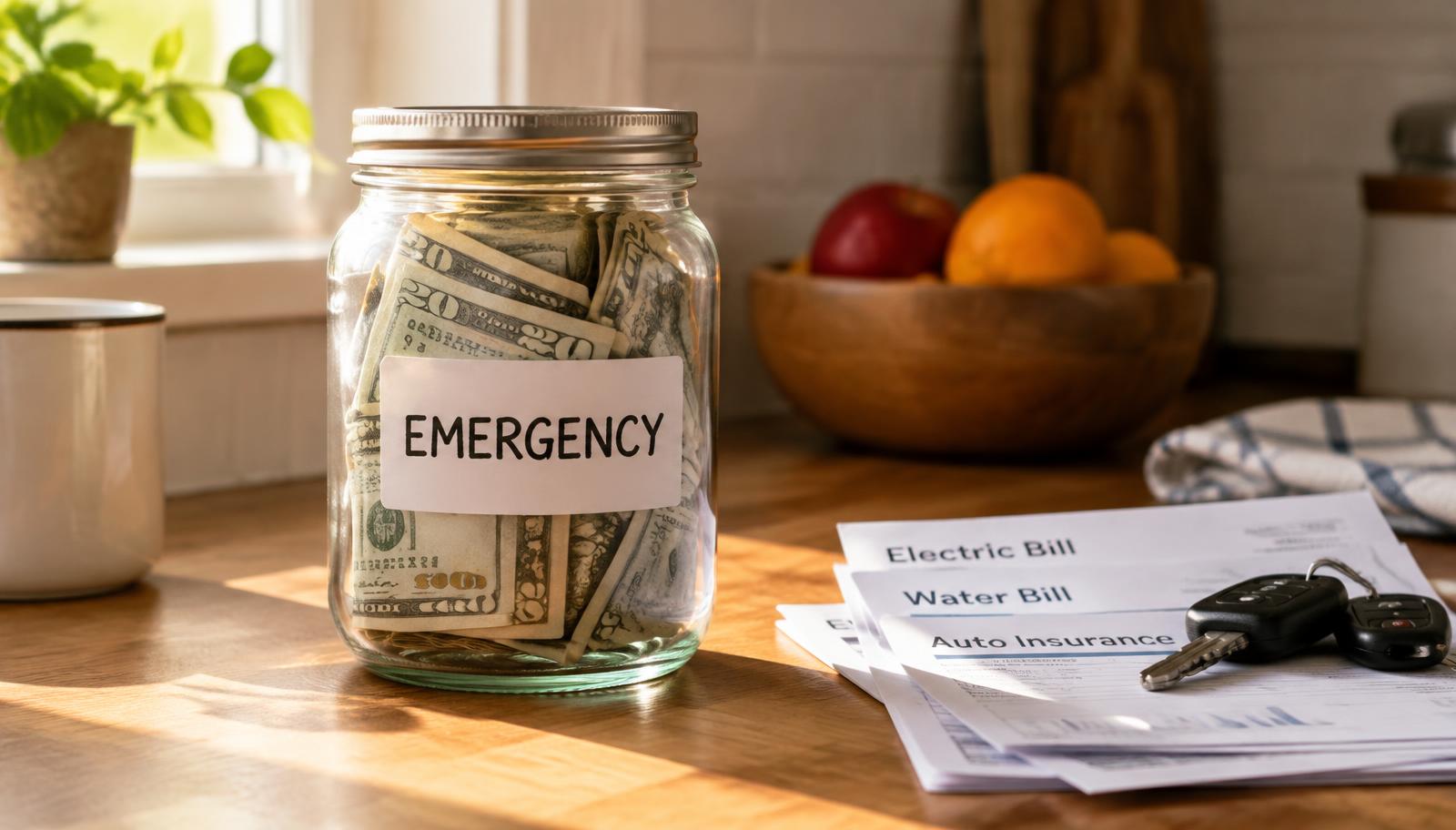
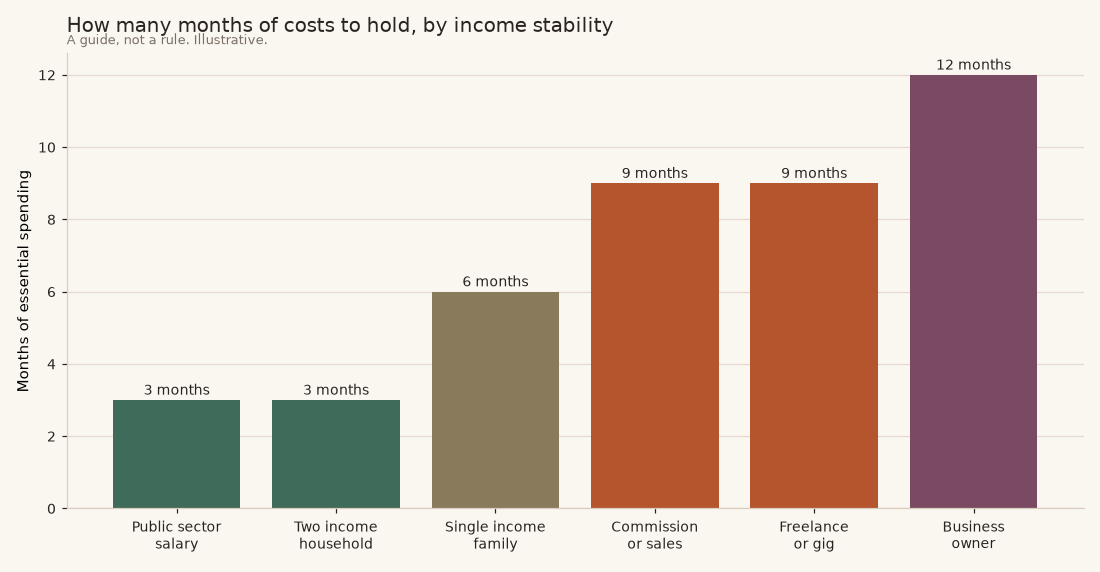
Six months is the headline, but the right answer depends on how predictable your income is and how many people depend on it. A tenured public sector worker with a partner also earning needs far less cushion than a self employed contractor with two children.
Crucially, size the fund on essential spending, not total spending. Essentials are housing, utilities, food, transport, insurance, minimum debt payments, childcare and medication. Restaurants, holidays, subscriptions and clothes are not essentials, and in the situation where you need this money they will be the first things to go anyway. For most households this cuts the target by 25 to 35 percent, which turns an intimidating number into an achievable one.
| Monthly essentials | Three month target | Six month target |
|---|---|---|
| 1,200 | 3,600 | 7,200 |
| 1,800 | 5,400 | 10,800 |
| 2,500 | 7,500 | 15,000 |
| 3,500 | 10,500 | 21,000 |
Where the money should sit
Three rules govern this account. It must be accessible within a few days. It must not be able to fall in value. And it should be slightly annoying to reach, so that it is not spent on a sale.
| Home for the cash | Access | Verdict |
|---|---|---|
| Easy access savings account at a separate bank | Same or next day | The default answer for most people. |
| Money market fund inside a brokerage account | Two to three days | Often the best yield. Fine for the portion beyond one month. |
| Cash ISA or tax advantaged savings | Same or next day | Good where interest would otherwise be taxed. |
| Current account with your main bank | Instant | Only for the first 500. Too easy to spend. |
| Stocks, crypto, or a fixed term bond | Variable or locked | Not an emergency fund. This is the mistake that costs people the most. |
A structure that works well in practice: keep one month of essentials in instant access at your everyday bank, and the remaining five months in a higher yielding account at a different institution. The friction of the transfer is a feature. Do check that the amount stays within deposit protection limits, which are 85,000 pounds per institution in the UK and 250,000 dollars in the US.
How long it takes to build, realistically
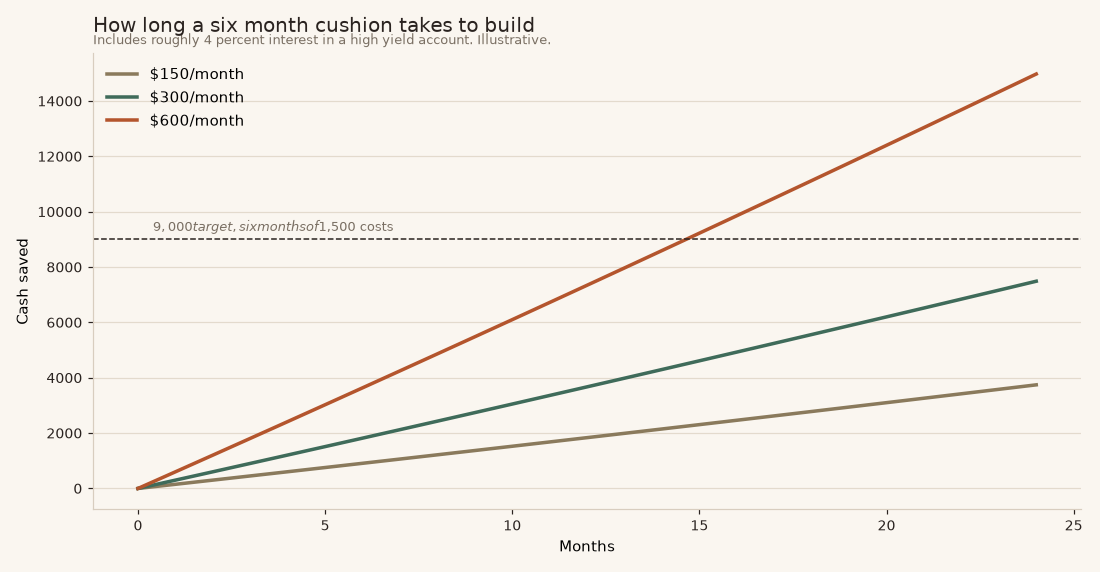
At 300 a month, a 9,000 target takes a little over two years. That sounds slow until you compare it with the alternative, which is being permanently eleven days from trouble. Break it into stages so you get wins along the way: 500 first, then one month of essentials, then three months, then six. The first 500 delivers most of the psychological benefit, because it covers the overwhelming majority of actual emergencies people face.
Ways to get there faster that actually work
Automate the transfer for the day after payday, not the day before the next one. Money that never lands in your spending account is not money you have to resist. Increase the amount by the exact value of any pay rise for the duration of the build, then stop. Redirect one time inflows in full: tax refunds, work bonuses, insurance rebates, selling the things in the spare room. And review the four largest recurring bills once, properly, since insurance, broadband, mobile and energy renewals typically yield a combined 40 to 80 a month for an afternoon of work.
One thing I would not do is stop pension or employer matched contributions while building the fund. You are giving up free money and tax relief to hold cash. Slow the emergency fund build instead if you must choose.
The honest downside: inflation
Cash loses purchasing power. That is not a reason to avoid holding it, but it is a reason to hold the right amount rather than a comfortable excess. Twelve months of essentials sitting in a savings account for a decade is a genuine cost, and you can see the scale of it in our inflation erosion calculator. The fix is a cap. Once the fund hits its target, every further pound goes into investments, not into the cushion. If you need a starting point for that step, our guide on best ETFs to buy in 2026 covers the low cost core most people use.
What counts as an emergency
Write this down when you open the account, while you are calm. My own list is short: loss of income, essential home repair, essential vehicle repair, medical or dental costs, urgent travel for family illness. That is it. A holiday is not an emergency. A wedding you have known about for a year is not an emergency. A sale is certainly not an emergency, and I have talked myself into that one before.
When you do use it, and you will, the rule is to refill before resuming anything optional. Treat the repayment like a bill with a due date. Most people who lose the habit lose it after the first legitimate withdrawal, because the account stops feeling like a system and starts feeling like a defeat. It is neither. It worked exactly as designed.
Situations that change the maths
If you are self employed, hold a separate tax pot as well and never treat it as a cushion, because that money was never yours. If you are on a variable or commission income, size the fund on your worst three months of the last two years rather than the average. If you own a home, add an annual maintenance allowance of roughly 1 percent of the property value on top of the emergency fund, because a roof is predictable in the long run even though it is a surprise on the day. And if you have dependants, the fund sits alongside insurance rather than instead of it, since no realistic cash buffer replaces income protection or life cover.
Where I ended up
It took me until early 2020 to reach six months. The timing was almost comic, because within weeks of hitting the target the world shut down and my industry stopped hiring. This time I did not take the first job offered, did not touch a credit card, and did not sell an investment at the bottom. I did use about a third of the fund, and it took fourteen months to replace.
That is the whole return on this asset. It earns a little interest and it buys you the ability to make good decisions on the worst week of your year. There is no chart that captures how much that is worth.
Where the cushion sits in the wider plan
A common question is whether to build the full six months before investing anything. In practice a staged approach works better than a strict sequence, because a decade of missed employer matching is a large price to pay for extra cash.
| Step | Action | Reasoning |
|---|---|---|
| 1 | Save 500 to 1,000 in cash | Covers the overwhelming majority of real world emergencies. |
| 2 | Contribute enough to get any employer pension match | A guaranteed return you cannot replicate anywhere else. |
| 3 | Clear debt above roughly 8 percent | Paying 23 percent while saving at 4 percent is a losing trade. |
| 4 | Build to three months of essentials | Enough to absorb a job loss without panic decisions. |
| 5 | Invest, and extend to six months in parallel | Both goals progress, neither one blocks the other. |
If your job is genuinely stable and your industry is hiring, you can reasonably stop the cushion at three months and put the rest to work in the market. If your income is variable or your sector is contracting, go the other way and hold nine. The right answer depends on how quickly you could replace your income, and only you can estimate that honestly.
Insurance is the other half of the same job
An emergency fund is designed for events lasting weeks to months. It is not designed for events lasting years, and trying to self insure against those is how people end up saving forever and investing never.
Three products cover the long tail. Income protection pays a percentage of your salary if illness stops you working, and it is the most underrated policy in personal finance for anyone whose household depends on their earnings. Life cover matters if someone relies on your income, and term cover is inexpensive when bought young and healthy. Basic home and contents cover, with an excess you could actually pay from the emergency fund, prevents a single event from wiping out years of saving.
Once those are in place, the cushion can stay a sensible size rather than expanding to cover fears it was never meant to address. Check any cover you already receive through an employer before buying, since death in service and sick pay schemes vary enormously and are often better than people assume.
This article is general information and education, not personal financial advice. Interest rates, deposit protection limits and tax rules change, so check current figures for your own country. Consider speaking to a regulated adviser about your circumstances.