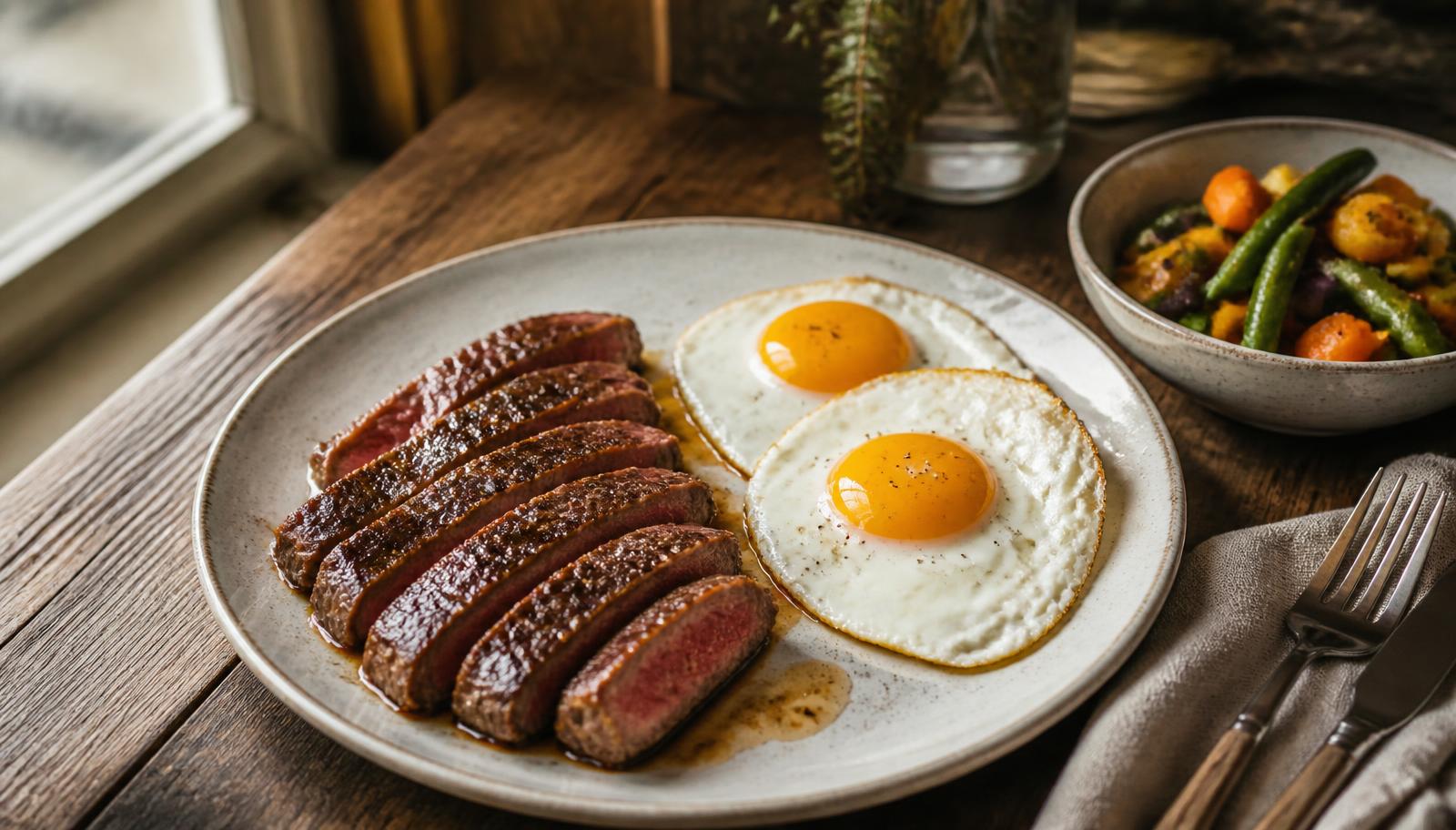
The carnivore diet is everywhere right now. Spend an evening reading gut health stories online and you will find people saying that eating only meat changed their lives. Bloating gone. Energy back. Weight down. Autoimmune symptoms quieter. Foods that used to cause misery simply removed from the equation.
I understand why that sounds appealing. My sister spent three years mapping every toilet between her flat and her office. When eating becomes tied to bloating, pain, urgency or fear, you stop asking whether a diet sounds extreme. You start asking one question only: could this finally make me feel better?
There is a second question that deserves the same attention. What does the carnivore diet actually do to your gut microbiome? Two patient cases discussed by gut health physician Dr Rajsree Nambudripad give a rare look at the answer. Both patients cut out plant foods and fibre completely. Their outcomes could hardly have been more different, and that contrast is the real lesson.
What is the carnivore diet?
The carnivore diet is an extremely restrictive eating pattern built almost entirely from animal foods. Depending on the person it can include beef and other meats, fish and seafood, chicken, eggs, animal fats and some dairy.
- Fruit, vegetables, grains, legumes, nuts and seeds are generally removed
- Dietary fibre can fall close to zero
- Supporters argue that removing plant foods removes potential triggers for digestive and inflammatory symptoms
The obvious concern is what happens to the gut microbiome when fibre disappears. Certain beneficial bacteria ferment fibre to make short chain fatty acids, including butyrate, which matters for colon health. So what happens after months or years without any? That is where these two stories become interesting.
Patient one: a year on carnivore did not heal her gut
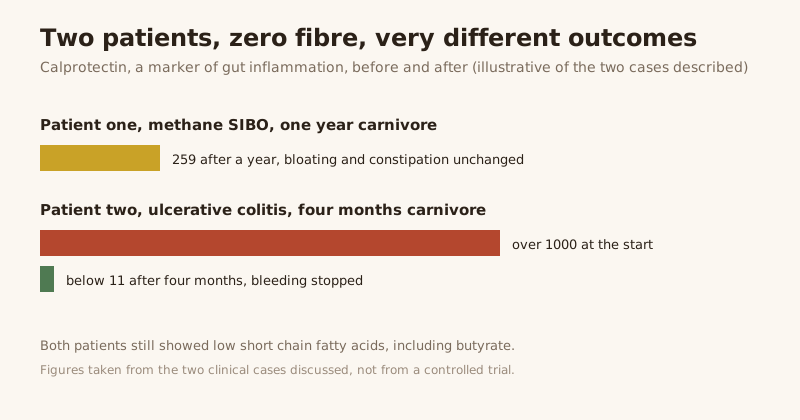
The first case involved a 19 year old woman with Hashimoto's hypothyroidism, chronic bloating, constipation and intestinal methanogen overgrowth, usually called methane SIBO. She had already tried antibiotics, herbal antimicrobials and restrictive diets. Nothing gave her lasting relief.
Then she found the carnivore diet and committed completely. No fruit, no vegetables, no grains, no fibre. Just meat and animal products, for a full year.
The bloating did not go. She was still severely constipated, sometimes passing only one or two small stools a week. Imagine how that feels. You give up almost everything because you believe you are doing something hard now in exchange for feeling better later. You say no to foods you loved. You tell yourself healing takes time. Then a year passes and you are still struggling.
What her testing showed
- Calprotectin, a marker of intestinal inflammation, elevated at 259
- Bacterial imbalance, described as dysbiosis
- Lactobacillus undetectable
- Short chain fatty acids, including butyrate, extremely low and described as nearly absent
- Methane breath test still positive
Removing plant foods had not resolved the digestive problem that pushed her towards such an extreme diet in the first place. The clinician's reading was that sluggish motility, difficulty digesting fats and dysbiosis still needed treating.
Patient two: carnivore and ulcerative colitis
The second case involved a 36 year old woman with ulcerative colitis, a form of inflammatory bowel disease. Her situation was serious. She was passing blood daily and her calprotectin had risen above 1,000. Her gastroenterologist recommended a biologic medication. She was not ready for that step and tried a strict carnivore diet instead: meat, chicken, eggs, fish and butter, plus supplements and added fats.
Within weeks, according to the case as presented, the bleeding stopped. Over the following months she lost more than 50 pounds, which was wanted weight loss in her case. Her energy came back. She returned to yoga and to part time work. She reported no bleeding, no bloating, no urgency, no abdominal pain and a formed bowel movement every day. After four months her calprotectin had fallen from over 1,000 to below 11.
Her symptoms improved, her microbiome did not
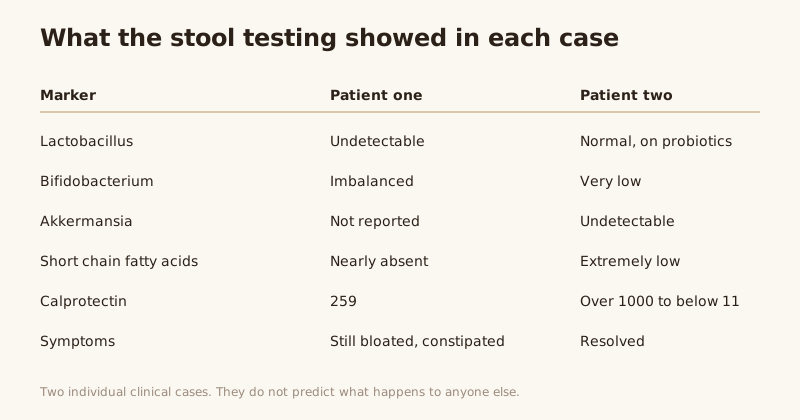
Her Lactobacillus was normal, which the clinician put down to the high dose probiotic she was taking. But Bifidobacterium was very low and Akkermansia, a bacterium linked to the gut's mucus lining, was undetectable. Her microbiome was still considered significantly imbalanced, and once again her short chain fatty acids, including butyrate, were extremely low.
This is the part I find most interesting. Feeling better does not tell us everything that is happening inside the gut. That does not make her improvement less real. It clearly mattered enormously to her. But symptom relief and long term microbiome health are not automatically the same thing.
Why can the carnivore diet make some people feel better?
If your digestive system seems to react to countless foods, removing almost all of them can bring relief simply because there are fewer possible triggers left. For someone with significant gut inflammation or food sensitivities, that simplicity can feel like a rescue.
The clinician presenting these cases suggested carnivore may have acted like a period of bowel rest for the second patient. Importantly, she did not present it as her first choice for inflammatory bowel disease. Her preferred starting point was the less restrictive autoimmune paleo, or AIP, diet, with carnivore held back as a more extreme option. Something can be useful as a short term therapeutic tool without being a good lifelong diet.
Why is butyrate important for gut health?
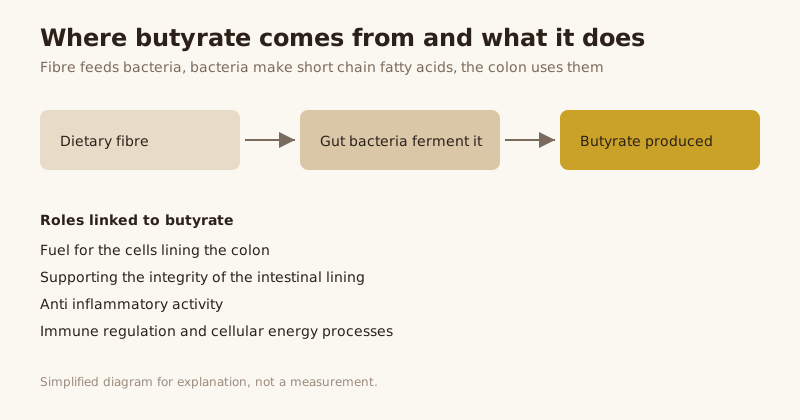
Butyrate is produced when gut bacteria ferment dietary fibre. Short chain fatty acids such as butyrate are associated with supporting the integrity of the intestinal lining, anti inflammatory activity, immune regulation, cellular energy processes and metabolism. Butyrate is also an important fuel for the cells lining the colon.
So if a zero fibre diet substantially reduces butyrate production, the honest question is what that means after five, ten or twenty years. Right now there is no satisfying answer, and anyone who tells you otherwise is guessing.
Carnivore, ketosis and beta hydroxybutyrate
There is another piece of the puzzle. A sufficiently low carbohydrate carnivore diet can induce ketosis, during which the liver produces a ketone called beta hydroxybutyrate, or BHB. Research discussed in the source suggests BHB shares some biological properties with butyrate, including effects on inflammatory signalling and mitochondrial function.
Could ketosis partly explain why some people feel good on carnivore even while gut derived butyrate is almost absent? Possibly. It is presented as a plausible explanation, not a settled conclusion, and that distinction matters.
Is the carnivore diet good for SIBO?
If you have SIBO and carnivore dramatically reduces your bloating, your experience should not be dismissed. But fewer symptoms do not mean the SIBO has gone. The first patient is the clearest example: her methane overgrowth survived a year of the diet.
Conditions such as SIBO can involve slow gut motility, incomplete digestion and microbial imbalance. Removing fermentable foods can cut gas and symptoms without correcting any of those. That creates a difficult trap. You feel better on fewer foods, every attempt to add foods back brings symptoms, and restriction slowly becomes the only thing that feels safe. That deserves empathy, not judgement. People on very restrictive diets are usually not trying to be extreme. They are exhausted from feeling sick.
Can the carnivore diet help ulcerative colitis?
The second patient suggests the answer is more complicated than yes or no. Her bleeding stopped, her symptoms disappeared and her inflammatory marker normalised. The source also discusses a small published case series of 10 patients with inflammatory bowel disease who reported remission on ketogenic or carnivore style diets.
Small case reports cannot establish that carnivore is effective or safe for everyone with ulcerative colitis or Crohn's disease. Inflammatory bowel disease can cause serious complications and needs proper medical management. One person's improvement on a diet is not a reason for someone else to stop prescribed medication.
Is the carnivore diet safe long term?
This is where caution is warranted. The source itself accepts a major limitation: we do not have adequate long term data on the carnivore diet. Open questions remain about cardiovascular health, cancer risk and the consequences of chronically low production of microbial metabolites such as butyrate.
A 2021 survey of more than 2,000 adults who self identified as following a carnivore diet reported high satisfaction and improvements in weight, gastrointestinal symptoms and some metabolic measures. Those findings are interesting, but self reported improvements over months cannot tell us what happens after decades. Feeling fantastic today matters. So does understanding what today's diet could mean in twenty years. We need both conversations.
If you can only tolerate meat, ask why
Suppose someone says: every time I eat vegetables or fibre I am painfully bloated, but on meat alone I finally feel normal. The compassionate response is not to tell them they are imagining it. Relief matters. Eating without fear matters. Getting through a working day without thinking about your gut matters.
But there is a second question worth asking. Why has your gut reached a point where so many foods are hard to tolerate? Restriction removes triggers. It does not necessarily correct whatever created those intolerances. The conclusion in the source is similar: carnivore may have a role as a short term tool for some people, with the longer term goal being restored gut health, better microbial diversity and a slowly widening list of tolerated foods.
The bottom line on the carnivore diet and gut health
Does the carnivore diet destroy your gut? These cases do not prove that. Does it heal your gut? They do not prove that either. What they show is how differently two bodies can respond to the same restriction. One woman followed carnivore for a year and kept her bloating, constipation and microbial imbalance. Another saw an extraordinary drop in symptoms and inflammation within months, while still showing an imbalanced microbiome and almost no short chain fatty acids.
So the most useful question is probably not whether carnivore is good or bad. It is: why am I feeling better, what underlying problem am I actually solving, is something still going wrong beneath the surface, what is my long term plan, and will improving my gut eventually let me eat more foods rather than fewer?
That is a more hopeful definition of gut health. Perhaps the best sign of a healthier gut is not how many foods you can cut out. It is how many you can eventually bring back.
Read next
- Obesity diet and exercise plan: foods to eat and safe workouts
- Liver disease diet: foods to eat and avoid
- Kidney stone diet: foods to eat and avoid
- Check your BMI, including the lower Asian and Black thresholds
Frequently asked questions
Does the carnivore diet change your gut microbiome?
It can. In both cases here, stool testing found abnormalities after periods without dietary fibre, and both patients had extremely low short chain fatty acids including butyrate. Two individual cases are not proof of what happens to everyone.
Does the carnivore diet eliminate beneficial gut bacteria?
Results differed. The first patient had undetectable Lactobacillus after a year. The second kept normal Lactobacillus while taking a high dose probiotic, but still had very low Bifidobacterium and undetectable Akkermansia.
Can you have healthy bowel movements without fibre?
The second patient reportedly had a formed bowel movement daily on zero fibre. Stool contains more than undigested food, including bacterial material and byproducts. Her experience does not mean everyone stays regular without fibre.
Does carnivore cure SIBO?
Nothing here supports calling it a cure. The first patient's methane overgrowth remained after roughly a year on the diet.
Can carnivore help ulcerative colitis?
One patient had a dramatic improvement and a normalised calprotectin. A single case cannot establish carnivore as a treatment. Anyone with inflammatory bowel disease should make major diet or medication changes with medical guidance.
Is the carnivore diet safe forever?
There is not enough long term evidence to say confidently. Open questions remain about cardiovascular health, cancer risk and chronically low microbial production of compounds such as butyrate.
Medical disclaimer: this article is for education only and is based on patient cases and research discussed in the source material. It is not medical advice. Individual experiences do not mean a carnivore diet will produce the same benefits or risks in you. If you have inflammatory bowel disease, persistent gut symptoms, bleeding, unexplained weight loss or abnormal inflammatory markers, seek medical care. Do not stop prescribed medication or replace medical treatment with a restrictive diet without speaking to a qualified healthcare professional.