My sister in law is a runner. She is the most disciplined eater I know: green smoothie every morning, almonds in her bag, big spinach salads, protein shake after long runs, and the kind of water bottle discipline the rest of us pretend to have. She was also, for about two years, forming kidney stones roughly every nine months, and she could not understand it. "I eat better than anyone in this family," she said once, and she was right. She did.
The 24 hour urine test explained it in a single line. Her oxalate was very high, her citrate was low, and she was losing far more fluid on long runs than she was replacing. The smoothie, the almonds and the spinach were an oxalate delivery system, and she had cut dairy years earlier because she thought it was a stone risk. Nothing she was doing was unhealthy in general. It was just badly matched to her particular kidneys.
That is the honest theme of this article. There is no universal kidney stone diet. There is a diet for your stone type, and there is a way of training that does not quietly set you up for the next one.
Start with the stone type, not the food list
Around seven in ten stones are calcium oxalate, and most of the advice below is aimed at those. Uric acid stones need a different emphasis: less animal purine, more alkaline urine, attention to insulin resistance. Calcium phosphate stones can worsen with aggressive alkalinisation. Struvite stones are an infection problem and diet barely touches them.
So before you rearrange your shopping, get the stone analysed and ideally get a 24 hour urine collection, as recommended for recurrent stone formers in NICE guideline NG118. Eating to a list that does not match your chemistry is how my sister in law spent two careful, well intentioned years going in the wrong direction.
Foods to eat
| Eat more of | Why it helps |
|---|---|
| Water, and plenty of it | Dilution is the single best evidenced prevention. Target more than 2 litres of urine a day. |
| Lemons, limes, oranges | Citrate binds calcium in urine and inhibits crystal growth. Fresh citrus and orange juice both raise urinary citrate. |
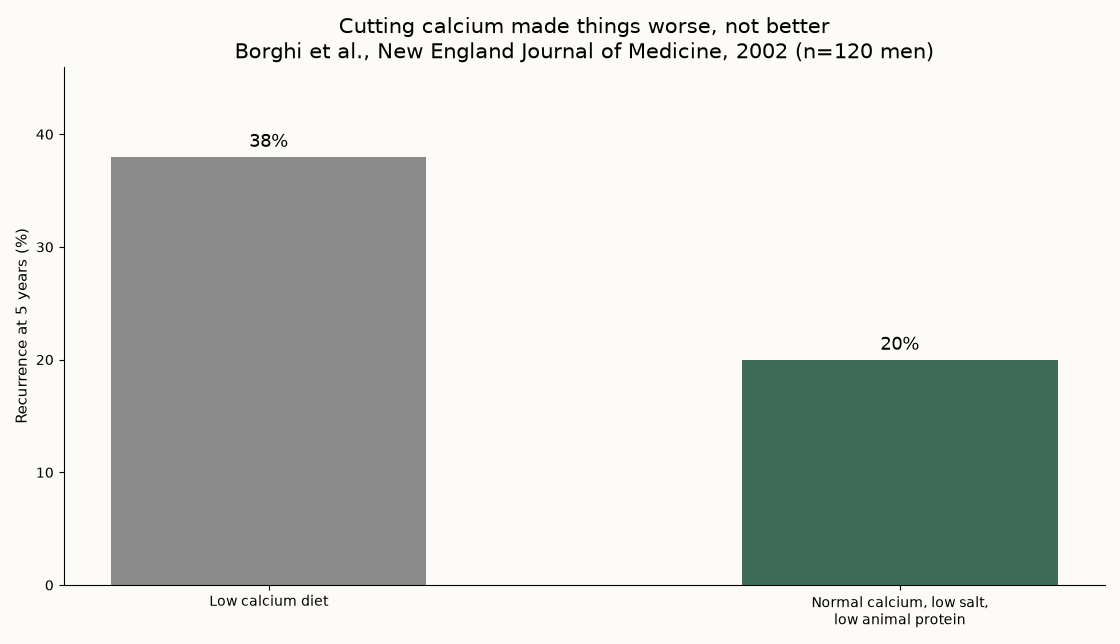
| Milk, yoghurt, cheese or fortified alternatives | Dietary calcium eaten with meals binds oxalate in the gut so it never reaches the urine. |
| Fruit and vegetables generally | Alkalinise urine, raise citrate and raise potassium. A DASH style pattern was associated with markedly lower stone risk (Taylor et al., JASN, 2009). |
| Whole grains, pulses in moderation | Phytate may inhibit calcium crystallisation, and fibre helps weight and insulin sensitivity. |
| Coffee and tea in normal amounts | Both associated with lower stone risk in large cohorts, despite the diuretic reputation (Ferraro et al., CJASN, 2013). Black tea is mildly high in oxalate, so pair it with milk. |
Foods to limit, and by how much
Almost nothing on this list has to be eliminated. Oxalate is concentrated in a surprisingly short list of foods, which means you can cut your intake substantially by changing about six items rather than rebuilding your whole diet.
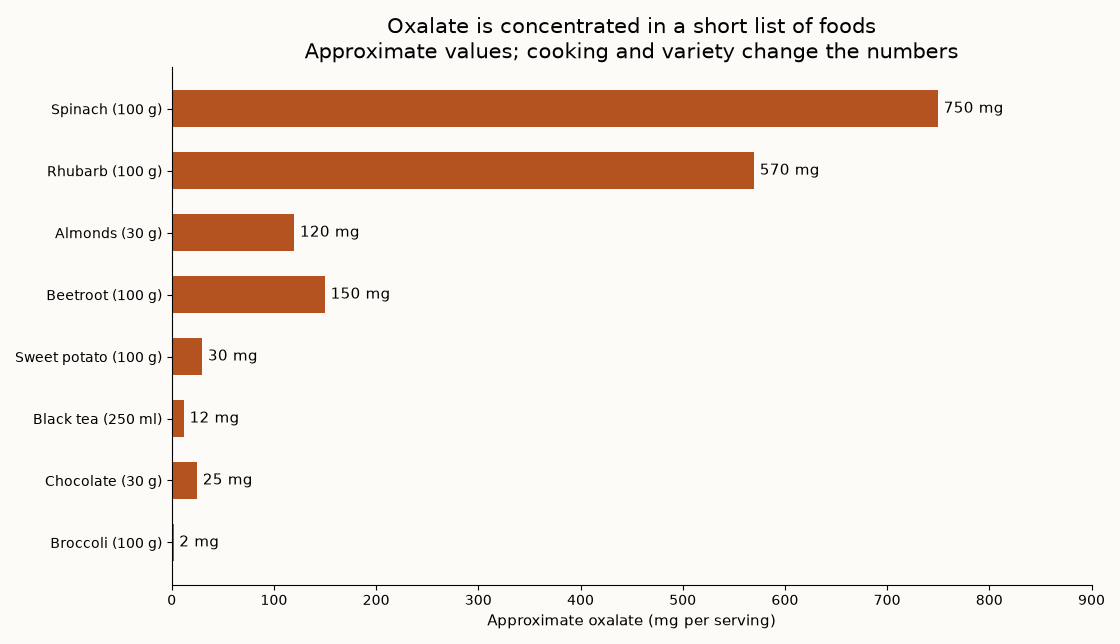
- Spinach. The biggest single offender by a wide margin. Swap to kale, rocket, cabbage, lettuce or watercress, all of which are low in oxalate. This one change is often worth more than everything else combined.
- Rhubarb, beetroot, Swiss chard. Same category, less often eaten daily.
- Almonds and cashews, including almond milk and almond butter. Very high. Peanuts are moderate. Pumpkin seeds, sunflower seeds and macadamias are lower.
- Salt. Sodium pulls calcium into the urine. Under 6 g of salt a day, and remember most of it hides in bread, sauces, cured meat and takeaways rather than the shaker.
- Sugar sweetened drinks. Fructose raises urinary calcium, oxalate and uric acid, and the cohort data link them clearly to higher risk.
- Large animal protein portions. Red meat, offal and shellfish raise uric acid and acid load and lower citrate. Moderate portions, once a day, is a sane target.
- Vitamin C supplements above 1,000 mg a day. Metabolised to oxalate. Food sources are fine.
Two cooking tricks that genuinely work. Boiling high oxalate vegetables and discarding the water removes a meaningful fraction of the oxalate, considerably more than steaming does. And pairing is powerful: yoghurt with the beetroot, milk in the tea, cheese in the salad. The calcium and the oxalate meet in your gut instead of in your kidney.
A sample day that is not miserable
| Meal | Example | The thinking |
|---|---|---|
| On waking | Large glass of water with lemon | Overnight urine is the most concentrated of the day |
| Breakfast | Porridge made with milk, blueberries, pumpkin seeds | Calcium present, low oxalate fruit, no almonds |
| Mid morning | Coffee with milk, 500 ml water | Coffee is associated with lower risk, milk supplies calcium |
| Lunch | Chicken and rocket wrap, yoghurt, orange | Rocket instead of spinach, citrus for citrate |
| Afternoon | 500 ml water, cheese and oatcakes | Steady fluid rather than a panic litre at bedtime |
| Dinner | Grilled fish, new potatoes, cabbage, tzatziki | Moderate protein, low oxalate sides, calcium with the meal |
| Evening | Water by the bed | For the inevitable 3 a.m. trip, which is now a feature not a bug |
Exercise: helpful, with one trap
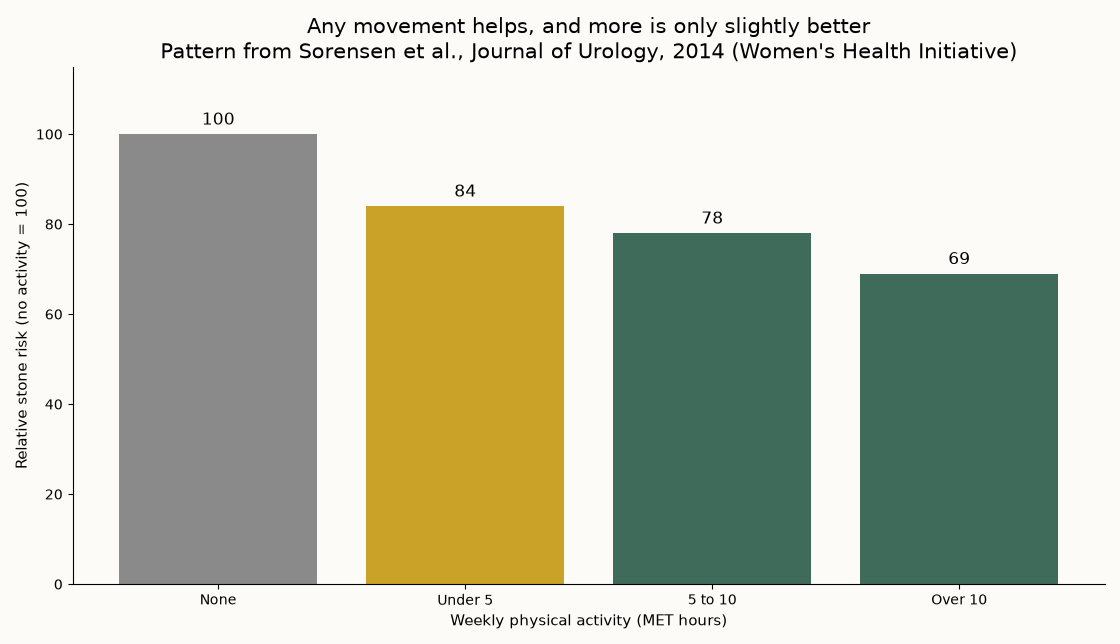
Physical activity is associated with lower stone risk, and encouragingly the benefit does not seem to require intensity. In the Women's Health Initiative analysis of more than 84,000 postmenopausal women, any activity was associated with a lower risk of stone formation, with the reduction reaching roughly 31 per cent at higher activity levels, and walking counted (Sorensen et al., Journal of Urology, 2014). Calorie intake, by contrast, was associated with higher risk.
The trap is dehydration. Endurance athletes, people who train in heat, and anyone working outdoors in summer have a well documented higher stone rate, because sweat loss concentrates urine for hours at a time. My sister in law's long Sunday runs were not the problem. Finishing them, having a coffee and not drinking properly until dinner was.
A weekly routine that suits stone formers
- 150 minutes of moderate movement. Brisk walking, cycling, swimming. Five lots of thirty minutes is enough and the evidence does not demand more.
- Two short resistance sessions. Muscle improves insulin sensitivity, which matters directly for uric acid stones. Bodyweight squats, press ups, rows, twenty minutes.
- Weigh your fluid loss once. Weigh yourself before and after a typical hard session. Every kilogram lost is roughly a litre of fluid to replace that day. Most people are shocked.
- Drink to a schedule on training days, not to thirst. Thirst lags behind loss, especially in cool weather when you do not notice sweating.
- Add electrolytes carefully. Sports drinks help with volume but many are high in sodium and sugar. Water plus food is usually better unless you are going long.
- If you are passing a stone right now, train gently or not at all. Walking is fine. Heavy lifting through colic is not.
Weight, insulin resistance and why the threshold matters
Higher body weight and larger waist size raise stone risk, and the mechanism is specific: insulin resistance reduces the kidney's ammonium production, urine becomes more acidic, and uric acid comes out of solution (Taylor et al., JAMA, 2005). This is the same mechanism that puts stone formers at higher risk of type 2 diabetes, which is why the two problems keep turning up in the same clinic.
Use our BMI calculator to see where you are, and pay attention to the toggle. The NHS uses a lower overweight threshold of 23 for adults of South Asian, Chinese, other Asian, Middle Eastern, Black African and African Caribbean background, because metabolic risk appears about two BMI points earlier in these groups. Waist to height ratio under 0.5 is a useful companion check.
Lose weight gradually and through a diet high in plants and moderate in protein. Very low carbohydrate, high protein plans do help people lose weight, and they also acidify urine, raise calcium excretion and lower citrate, which is a poor combination for anyone who has already made a stone.
Supplements: what is worth taking
- Potassium citrate. Prescription, well evidenced for low citrate stone formers and for dissolving uric acid stones. Worth asking about if your citrate came back low.
- Magnesium. Modest theoretical benefit as a crystal inhibitor. Low quality evidence. Not harmful at food level intakes.
- Calcium supplements. Only if needed for bone health, and always with food rather than between meals.
- Vitamin C at high dose. Avoid.
- Probiotics containing Oxalobacter formigenes. Biologically fascinating, commercially oversold, trial results so far disappointing.
Where my sister in law ended up
She kept the running. She swapped spinach for kale and rocket, moved the almonds to pumpkin seeds, put Greek yoghurt back in her diet after years of avoiding dairy for exactly the wrong reason, and started weighing herself around long runs so she knew what she owed her body in fluid. Her repeat 24 hour urine at six months looked like a different person's. Three years now, no stones.
She was not doing anything wrong in the general sense. She was doing the right things for a body that happened to have a particular vulnerability, and nobody had told her which lever to pull. That is usually the whole story with kidney stones.
Read next
- How to prevent kidney stones: what the evidence actually shows
- Kidney stone treatment: how to pass a stone and when you need surgery
Frequently asked questions
What foods should I avoid with kidney stones?
For calcium oxalate stones, limit spinach, rhubarb, beetroot, almonds and cashews, cut salt, drop sugar sweetened drinks and keep animal protein portions moderate. Do not cut dietary calcium.
Is milk bad for kidney stones?
No. Dietary calcium taken with meals lowers recurrence by binding oxalate in the gut. A randomised trial found the low calcium approach produced almost twice the recurrence of a normal calcium, low salt diet.
Does exercise help prevent kidney stones?
Yes. Moderate activity is associated with lower risk, and intensity does not appear to be required. The important caveat is replacing the fluid you sweat out, because dehydrated athletes have a higher stone rate.
Can I drink coffee if I get kidney stones?
Normal coffee and tea intake is associated with lower stone risk in large cohort studies. Black tea is moderately high in oxalate, so adding milk is a sensible habit.
This article is general information, not medical advice. Always match diet changes to your actual stone composition and urine chemistry with your clinician or a registered dietitian.