There is something about entering your 40s that changes the way you look at time. Not in a gloomy way. It feels more like the moment the background music gets quieter and you finally hear the questions you have been avoiding. How am I actually doing? Am I looking after myself? Am I present with the people I love? And if I keep living exactly like this for another twenty years, where do I end up?
I started thinking about this properly after watching a talk by a man in his 50s listing the things he wished he had taken more seriously a decade earlier. His central idea was simple. By middle age, most of us already know where the friction is. We know when we are not exercising. We know when stress is winning. We know when a friendship leaves us drained every single time. We know when work has quietly swallowed family life.
I would not treat a motivational talk as medical fact, so I went and read the research too. What follows is the honest version: twelve lessons, with the evidence where it exists and the caveats where it does not.
Key points
- Blood pressure, cardiovascular risk, appropriate cancer screening, sleep and mental health deserve attention before symptoms arrive.
- Midlife physical activity is consistently linked with healthier ageing and lower disability and disease risk later in life.
- Loneliness between 40 and 65 is linked with poorer mental and physical health related quality of life.
- Turning 40 does not mean you need every blood test or an expensive executive screening package.
- Mental health deserves the same seriousness as a blood pressure reading.
- Pick one change. Not twelve.
1. Take your health seriously before something forces you to
The speaker in that talk described a severe panic attack at 38 that he was convinced was a heart attack. I understand why an experience like that rearranges your priorities. It is remarkably easy to file health under later while nothing obviously hurts.
Then 40 arrives. Maybe your blood pressure is creeping up. Maybe recovery from a late night is not what it was. Maybe your waistline changed without an announcement. Or maybe nothing feels wrong at all, which is precisely the point of preventive care.
Blood pressure is the simplest example. The US Preventive Services Task Force recommends screening adults for hypertension and suggests annual checks for adults aged 40 and over. High blood pressure matters because treating it lowers the risk of stroke, heart failure and coronary events. That makes a blood pressure cuff feel less like worrying about disease and more like maintaining something I intend to keep.
What health checks should a 40 year old man have?
This is where I would soften the advice in the original talk. You do not need a huge panel of testosterone, thyroid, kidney, liver and prostate tests simply because a birthday happened. More testing is not automatically better healthcare, and abnormal results on tests you never needed can lead to anxiety and more tests.
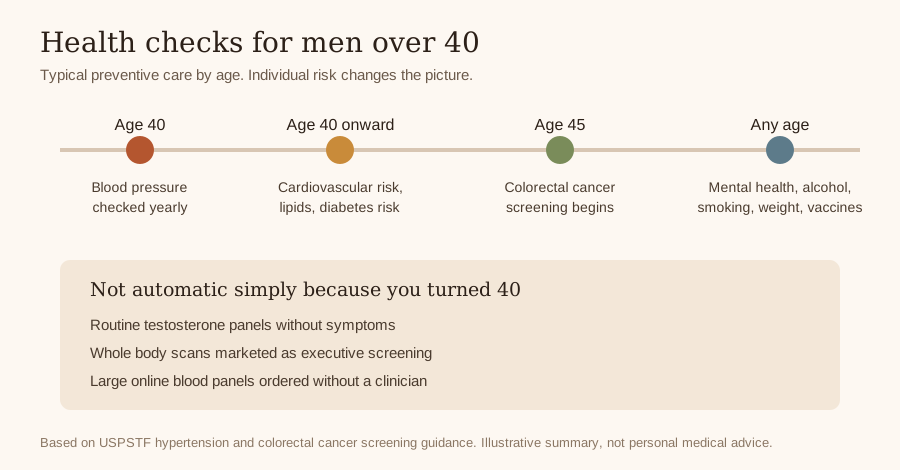
A better approach is a conversation with a clinician about care that fits your age, symptoms, family history and risk. That might include blood pressure, cardiovascular risk assessment, cholesterol testing where appropriate, diabetes risk, mental health, smoking and alcohol, weight and waist, vaccinations, sexual health and appropriate cancer screening.
One firm milestone does land in this decade. For average risk adults, the USPSTF recommends colorectal cancer screening from age 45 through 75. People with a family history, symptoms or higher risk conditions may need to start earlier or screen differently.
The best health checks for men over 40 are the ones that make sense for the individual man.
2. Your circle matters more than you think
We talk about friends as part of our social life. We rarely think of connection as part of health. The evidence is getting harder to ignore. A 2026 systematic review and meta analysis in Maturitas looked specifically at loneliness in adults aged 40 to 65. Across 17 independent studies, loneliness was associated with poorer mental health related quality of life and poorer physical health related quality of life (PMID: 42176606).
That does not mean every old friendship has to go because someone occasionally irritates you. Relationships are messy and people go through bad years. But your 40s are a useful time to ask how you feel after seeing someone. Supported and understood, or pulled back towards habits you are trying to leave behind? That is less about judging people and more about noticing that environment shapes behaviour.
3. Stop treating exercise as optional
This is the clearest of all the health tips for men in their 40s. Move. Not to look 25, not because ageing is shameful, and not as punishment for the weekend.
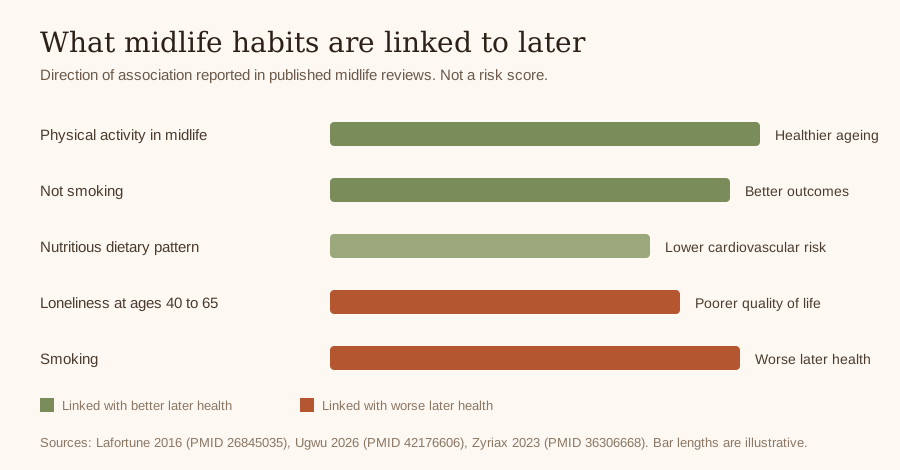
A rapid systematic review of behavioural risk factors in midlife pooled 164 studies with follow up between five and 36 years, and found consistent evidence linking midlife physical activity with healthier ageing and better disease outcomes decades later (Lafortune et al, PLoS One 2016, PMID: 26845035). That changes how I see a Tuesday evening session. It is not a calorie transaction. It is a deposit into the body I hope to live in at 70.
What is the best exercise for men over 40?
There is no magic programme. A sensible week mixes aerobic activity such as brisk walking, cycling, swimming or running, resistance training with weights, machines, bands or body weight, and some mobility and balance work, which matters more every year. Most guidance lands around 150 minutes of moderate activity plus two strength sessions.
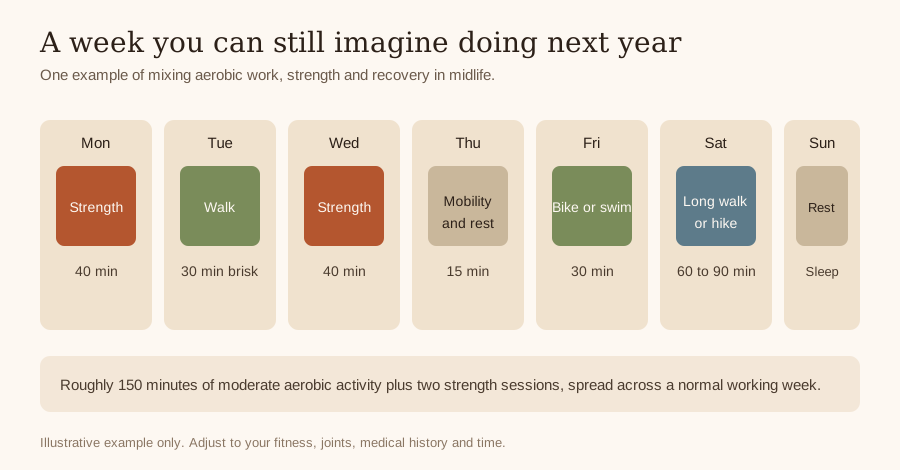
And most importantly, something you will actually keep doing. A theoretically perfect plan that lasts three weeks is worth less than the boring routine you can still picture doing next year. If you want a starting point for the numbers, our BMI calculator and longevity calculator are free and take a couple of minutes.
4. Stop waiting for motivation to fix habits you already understand
By 40, most of us have collected enough evidence about ourselves. I know what happens when I sleep badly for four nights. I know what happens when exercise falls out of the week. I know which foods leave me wondering why I ate them.
The talk makes this point aggressively. I would add compassion. Knowing what needs to change does not make changing it easy. A systematic review of barriers to healthy behaviour in midlife found the same obstacles over and over: lack of time from work and family responsibilities, cost, access problems, entrenched behaviour, environmental limits and psychological factors (Kelly et al, PLoS One 2016, PMID: 26815199).
People do not usually struggle because they are lazy. Sometimes they are exhausted. Sometimes they are raising children and caring for ageing parents in the same week. Sometimes money is tight. Sometimes depression makes everything heavier. Sometimes the habit is 25 years old. You can hold yourself accountable without hating yourself into changing.
5. Your kids need your presence more than another purchase
This one is not medical, and it may be the most human lesson here. Providing matters. But work expands to fill whatever space you give it. There is always another email, another client, another target. Childhood does not work like that. One day you pick your child up, and then, without noticing, you put them down for the last time. You never know which time was the last one.
So one of my favourite life lessons for men in their 40s is deeply ordinary. Make memories. Cook together. Walk the dog. Kick a ball around. Fix something in the garage. Have breakfast with nobody looking at a phone. It does not have to be expensive enough for Instagram. It has to happen.
6. Accept that some friendships change
Sometimes you meet an old friend and spend three hours talking about who you both were 20 years ago, because there is not much connecting who you are now. That does not make either of you a bad person. People grow in different directions.
What I would not do is respond by withdrawing from everyone, given what the loneliness evidence shows. The goal is not fewer relationships. It is healthier ones, where you can talk about where you are going and not only where you have been.
7. Protect your peace without avoiding every hard conversation
By your 40s, unnecessary drama is exhausting. But peace does not mean dodging discomfort. Sometimes peace requires one uncomfortable sentence. I cannot keep doing this. I need help. That does not work for me anymore. I am struggling. I am sorry. No.
Healthy boundaries are not about controlling people. They are about being clear on what you will take part in. I do not want a life without disagreement. I want a life without unnecessary chaos.
8. Learn to say no without the guilt
No is a tiny word and strangely hard to say. Every yes costs something. Yes to an unnecessary meeting is no to something else. Yes to another evening commitment is no to dinner at home. Yes to scrolling until midnight is a quiet no to sleep.
The question is not whether you can fit it in. It is what you are giving up by saying yes. Once I started thinking that way, saying no stopped feeling selfish.
9. Take responsibility, but do not pretend you control everything
Personal responsibility is the strongest theme in the original talk, and I like it with one qualification. Illness is not always preventable. People lose jobs. Relationships end. Parents get ill. Grief arrives without permission. Genetics, money and luck all matter.
So responsibility should not become a way of blaming yourself for everything difficult. What it can mean is this: given the situation I am in, what can I influence next? Making the appointment. Going for the walk. Updating the CV. Calling the therapist. Apologising. Checking your blood pressure. Asking for help. Responsibility is healthier when it means agency rather than blame.
10. Your lifestyle in your 40s really does matter
If you are wondering how to stay healthy in your 40s as a man, this is where evidence earns its keep. A systematic review of midlife lifestyle change and cardiovascular and cerebrovascular disease supported healthier dietary patterns and other modifiable behaviours as part of prevention (Zyriax and Windler, Maturitas 2023, PMID: 36306668). The midlife behaviour review found physical activity consistently linked with better later outcomes and smoking consistently linked with worse ones (PMID: 26845035).
| Area | What actually helps | Where to start this month |
|---|---|---|
| Blood pressure | Annual check from 40, treatment when needed | Book one check, write the number down |
| Movement | Aerobic plus two strength sessions weekly | Two 30 minute walks and one strength session |
| Diet | Overall pattern, not a perfect week | Protein and vegetables at two meals a day |
| Alcohol and smoking | Honest review, professional help early | Count the units for one week |
| Sleep | Consistent timing, seven hours or more | Fix the wake time first |
| Connection | Regular contact, not annual catch ups | One standing monthly meet up |
| Mental health | Treat persistent symptoms, do not absorb them | One appointment |
No single healthy meal transforms your future. No single bad night destroys it. The pattern matters, and patterns can change.
11. Comfort has a cost, but rest is not laziness
The talk argues that comfort gets more expensive with age and that middle age is no time to stop challenging yourself. I agree with part of that, but there is an important difference between comfort and recovery. Avoiding exercise for years because it is uncomfortable is one thing. Getting eight hours of sleep is another. Never taking a professional risk out of fear is one thing. Taking a weekend to recover from a brutal month is another.
We do not need to turn our 40s into a permanent test of toughness. Sometimes growth means discomfort. Sometimes health means rest. The skill is knowing which one you need this week.
12. Deal with the things you have been carrying
The final part of the original talk becomes deeply personal. The speaker describes childhood sexual abuse, and how unresolved trauma shaped his relationships, self worth and communication for years. He encourages people carrying something similar to seek help rather than keep suppressing it.
That does not deserve a motivational slogan. Trauma is complicated, healing is not a switch, and nobody should feel ashamed for not having fixed themselves by 40. But there comes a point where surviving and living start to feel like two different things.
Maybe you have spent years saying you are fine. Maybe nobody knows what happened. Maybe anger became easier than sadness, work became somewhere to hide, or drinking became a way to quiet your head. Maybe you have no tidy explanation at all. Asking for help is not an admission of failure. For some men it is the first time they have put something down.
If you are dealing with persistent anxiety, depression, trauma symptoms or distress, a qualified mental health or healthcare professional is a reasonable place to start. And if something happened to you, there was never a deadline for recovering from it.
A simple men's health after 40 checklist
- Know your numbers. Blood pressure and cardiovascular risk, checked rather than assumed.
- Ask about screening. Colorectal screening from 45 for average risk adults, plus whatever your history calls for.
- Move regularly. Cardio and strength you can sustain for years.
- Look at alcohol and smoking honestly. Get help before a crisis, not after.
- Protect sleep. Stop treating it as time stolen from productivity.
- Eat like your future body matters. Pattern over perfection.
- Stay connected. Protecting your peace is not the same as disappearing.
- Diary the family time before work takes it.
- Treat your mental health with the seriousness you would give a chest pain.
- Choose one thing to change. One. Then begin.
Frequently asked questions about men's health after 40
What are the most important health tips for men in their 40s?
Regular physical activity, not smoking, a nutritious overall diet, appropriate preventive screening, attention to blood pressure and cardiovascular risk, enough sleep, mental health care when it is needed, and keeping real relationships going. Individual priorities depend on your medical history and risk.
What health checks should a 40 year old man have?
There is no universal full health check. Blood pressure screening is the standout, and cholesterol, diabetes risk, weight, smoking, alcohol, mental health and family history guide the rest. Discuss your own screening with a clinician rather than ordering a panel online.
Should men over 40 have their testosterone checked?
Not simply because of a birthday. Testosterone testing is a clinical decision based on symptoms and assessment, not age alone. If you have symptoms that worry you, raise them with a clinician rather than assuming low testosterone is the cause.
When should men start colorectal cancer screening?
Current USPSTF guidance recommends screening average risk adults from age 45 through 75. Higher risk groups may need to start earlier or use a different method.
What is the best exercise for men over 40?
A mix of aerobic activity, resistance training twice a week, and some mobility work, chosen so you will still be doing it in a year. Research on midlife physical activity links it with healthier ageing and better disease outcomes later (PMID: 26845035).
Is it too late to get healthy at 40?
No. Midlife is exactly when modifiable behaviours are still worth addressing. The midlife evidence supports physical activity, diet and stopping smoking as targets for healthier ageing.
How can a man improve his life in his 40s?
Start smaller than you think. Pick one area that genuinely matters, whether that is exercise, sleep, preventive care, alcohol, family time, relationships or mental health, and make one sustainable change. Trying to repair everything at once turns self improvement into another source of stress.
The bottom line
The biggest lesson I took from all this was not that turning 40 means getting old. It was almost the opposite. Your 40s can be the decade you finally become deliberate about what happens next.
You do not have to become obsessed with longevity, buy every test on the market, train like an athlete or cut everyone who annoys you. Look after your body. Know your risks. Move. Sleep. Stay connected. Spend time with your children while they still want your time. Deal with the things that hurt. Say no when you need to. Ask for help when you need it. And stop assuming there will be a better time to start.
I do not want to reach my 50s wishing I had spent my 40s waiting. I want to arrive knowing I was present for them. Not perfect. Not fearless. Just awake to the fact that this part of life matters too.
Read next
- BMI calculator with Asian and Black thresholds
- Longevity calculator based on diet, habits and work
- Cortisol belly: 7 simple habits for a healthier waistline
- How to prevent liver disease: 7 habits backed by research
References
- Lafortune L, Martin S, Kelly S, et al. Behavioural risk factors in mid-life associated with successful ageing, disability, dementia and frailty in later life: a rapid systematic review. PLoS One. 2016;11(2):e0144405. PMID: 26845035.
- Ugwu LE, White JA, Hlungwani TM. The midlife health penalty: a systematic review and meta-analysis of loneliness and health-related quality of life in adults aged 40-65. Maturitas. 2026;210:108996. PMID: 42176606.
- US Preventive Services Task Force. Hypertension in adults: screening.
- US Preventive Services Task Force. Colorectal cancer: screening.
- Kelly S, Martin S, Kuhn I, Cowan A, Brayne C, Lafortune L. Barriers and facilitators to the uptake and maintenance of healthy behaviours by people at mid-life: a rapid systematic review. PLoS One. 2016;11(1):e0145074. PMID: 26815199.
- Zyriax BC, Windler E. Lifestyle changes to prevent cardio- and cerebrovascular disease at midlife: a systematic review. Maturitas. 2023;167:60-65. PMID: 36306668.
Medical disclaimer: this article provides general health information and is not a substitute for individual medical advice, diagnosis or treatment. Screening, exercise, diet and mental health decisions should be based on your own circumstances and discussed with a qualified healthcare professional.