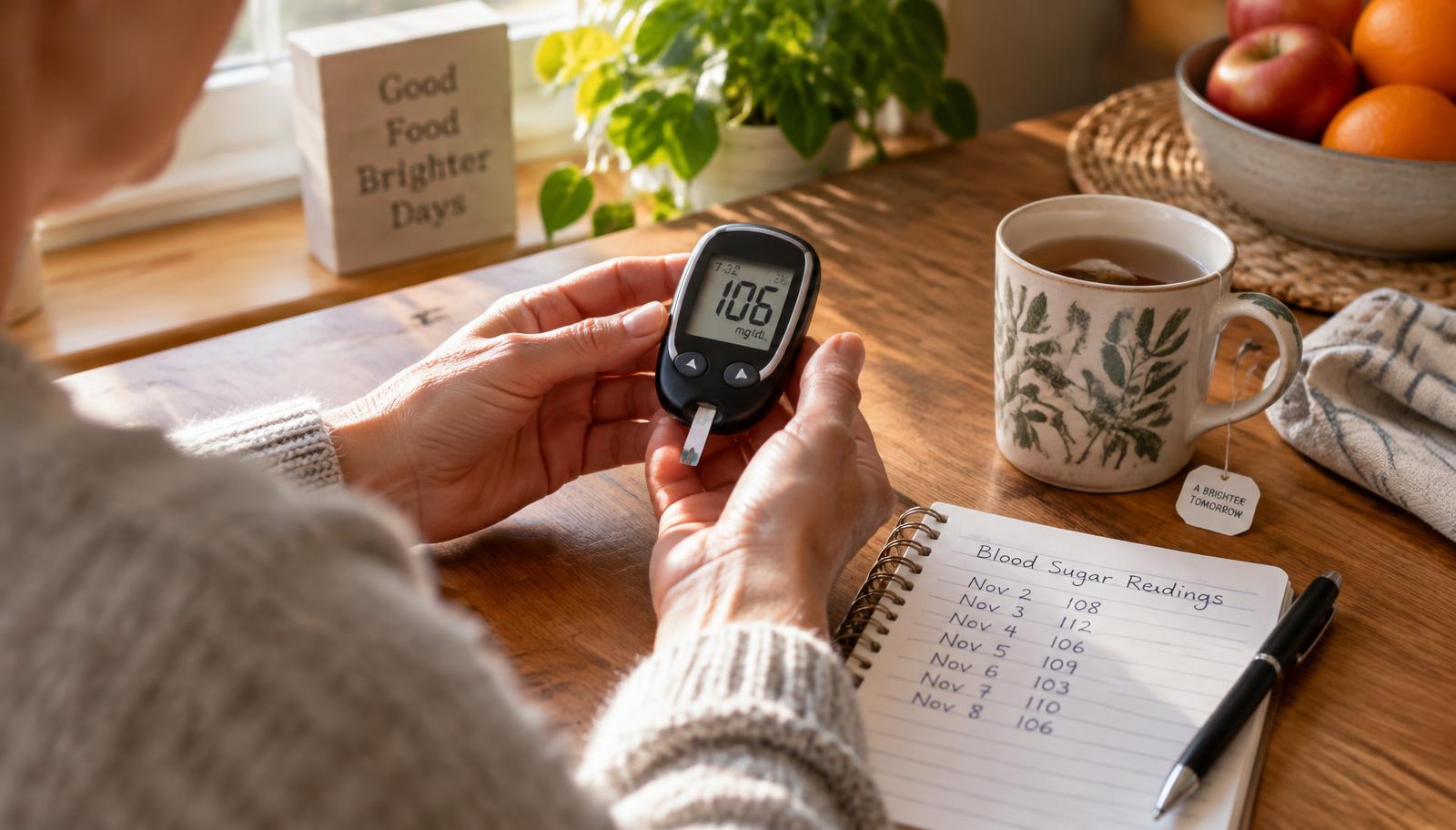
The worst week of my aunt's diagnosis was not the diagnosis. It was the fortnight afterwards, when she stood in her own kitchen holding a bag of basmati rice she had cooked every week for thirty years and genuinely did not know whether she was allowed to eat it. Somebody had handed her a leaflet with the word "carbohydrates" on it and no further instructions. She ate boiled chicken and cucumber for nine days and cried.
Nobody needs to go through that. You can eat rice. You can eat fruit. You can eat the food you grew up with. What changes is the shape of the plate, the company the carbohydrate keeps, and the size of the portion. Here is the detail.
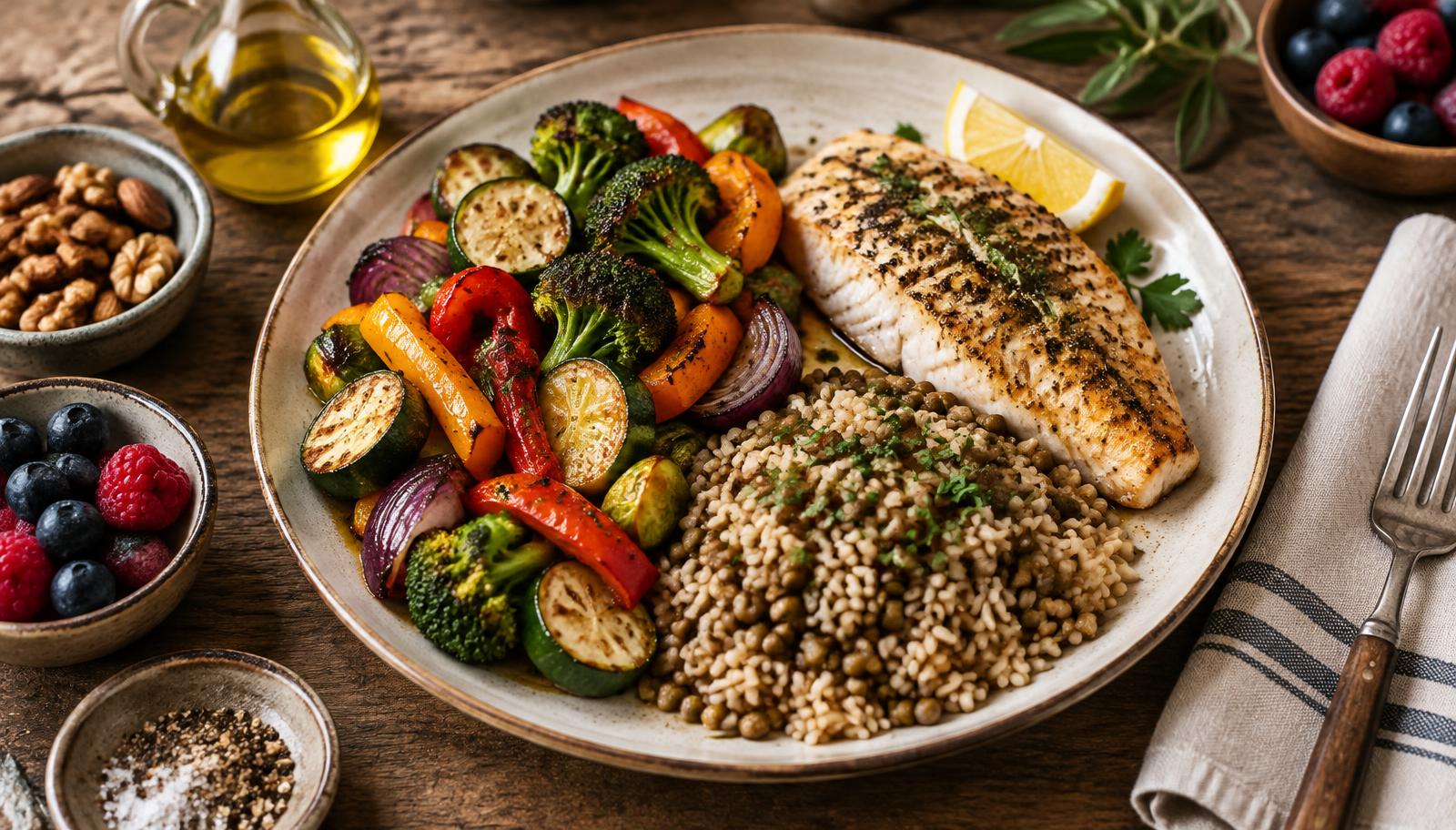
The plate method, because it survives real life
Counting carbohydrate grams is useful for some people and unbearable for most. The American Diabetes Association's Diabetes Plate gives you 80 per cent of the benefit with none of the spreadsheet.
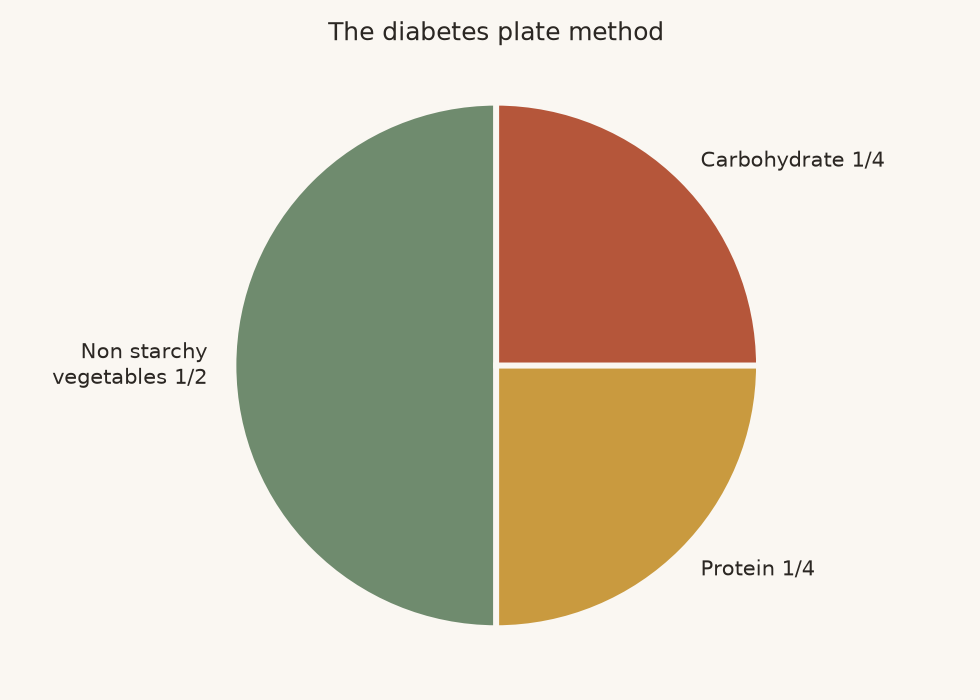
- Half the plate: non starchy vegetables. Broccoli, spinach, peppers, courgette, cabbage, green beans, salad, okra, aubergine, tomatoes.
- A quarter: protein. Fish, eggs, chicken, tofu, paneer in moderation, lentils, beans, Greek yoghurt.
- A quarter: carbohydrate. Rice, roti, potato, pasta, bread. Yes, really.
Foods to eat freely
| Group | Examples | Why it helps |
|---|---|---|
| Non starchy vegetables | Leafy greens, cruciferous veg, peppers, mushrooms | Very low glycaemic load, high fibre, high volume |
| Pulses | Lentils, chickpeas, black beans, kidney beans | Slow carbohydrate plus protein plus 7 to 9 g fibre per portion |
| Oily fish | Salmon, mackerel, sardines, herring | Omega 3 fats, no glycaemic impact, cardiovascular benefit |
| Nuts and seeds | Almonds, walnuts, pistachios, chia, flax | Trials link a daily handful to better glycaemic and lipid markers |
| Whole fruit | Berries, apples, pears, citrus, guava | Fibre slows absorption. Whole fruit is associated with lower diabetes risk |
| Fermented dairy | Plain yoghurt, kefir | Consistently associated with lower type 2 diabetes incidence |
| Extra virgin olive oil | Dressings, cooking | Central to the PREDIMED Mediterranean pattern |
Foods to limit, and what to do instead
Nothing here is banned. These are the items where portion and frequency matter most.
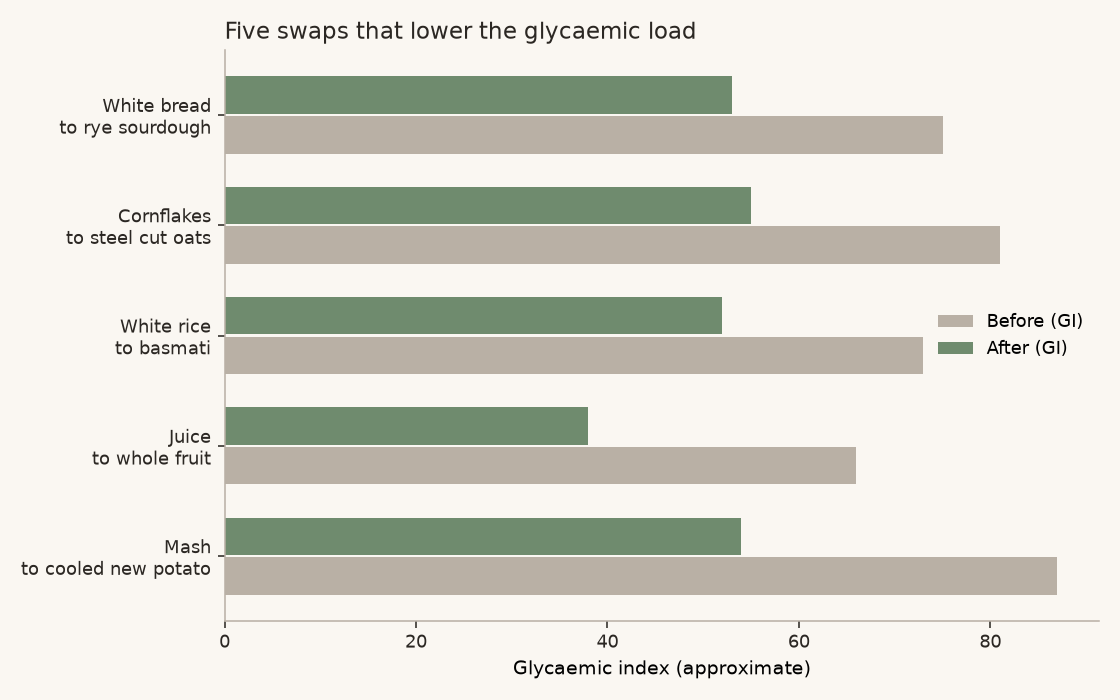
- Sugary drinks. The single highest value thing to remove. Swap to water, sparkling water with lime, or unsweetened tea.
- Fruit juice and smoothies. Juice behaves almost like a soft drink. Whole fruit does not.
- Highly refined starches. White bread, cornflakes, instant noodles, crackers. Swap to rye sourdough, steel cut oats, wholegrain pasta cooked al dente.
- Processed meats. Consistently associated with higher type 2 diabetes risk, independent of weight.
- Alcohol. It lowers glucose several hours later, which is a hypo risk if you take insulin or sulfonylureas. Never drink on an empty stomach.
Fibre is the headline act
If you change only one thing about what you eat, change this. The Lancet series on carbohydrate quality found the lowest rates of type 2 diabetes, coronary heart disease and mortality among people eating 25 to 30 g of fibre a day, with a clear dose response and no sign of harm at higher intakes (Reynolds et al., The Lancet, 2019). Typical intake in the UK and US is around 18 g.
Getting to 30 g without misery: a bowl of porridge with berries is about 8 g. A tin of chickpeas in a curry is roughly 12 g across two portions. An apple with skin is 3 g. Two slices of proper wholegrain bread is 6 g. Add lentils to a bolognese and nobody will notice.
Order, temperature and other free wins
- Eat vegetables and protein before carbohydrate. Meal sequencing studies show meaningfully lower post meal glucose peaks from nothing more than the order of forkfuls.
- Cook, cool, reheat. Cooling cooked potato, rice or pasta forms resistant starch, which lowers the glycaemic response even after reheating.
- Add acid and fat. Vinegar dressings, yoghurt and olive oil slow gastric emptying.
- Al dente beats soft. Overcooked pasta and rice digest faster.
- Walk afterwards. See our exercise guide for why two minutes counts.
A day of eating, written out
| Meal | Example | Rough carbohydrate |
|---|---|---|
| Breakfast | Steel cut oats with Greek yoghurt, berries, walnuts | 35 g |
| Lunch | Lentil and vegetable soup, rye bread, side salad with olive oil | 40 g |
| Snack | Apple and a small handful of almonds | 18 g |
| Dinner | Grilled mackerel, large mixed vegetables, half a cup of basmati rice | 30 g |
| Evening | Plain yoghurt with cinnamon | 8 g |
That is roughly 130 g of carbohydrate, 35 g of fibre, and food that a person can be cheerful about.
South Asian, Caribbean and African kitchens
Generic diabetes advice fails these households constantly, because it assumes a plate of meat, potatoes and two veg. Practical adjustments that keep the food intact: mix dal or chana into the rice so the portion is half pulses, choose atta roti over white naan, swap white rice for a smaller portion of basmati which has a lower GI, roast rather than fry provisions, and treat fried snacks as occasion food rather than everyday food.
Risk also arrives earlier in these groups at a lower body weight, which is why the NHS uses a BMI threshold of 23 rather than 25. Check yours properly with our BMI calculator, which includes the Asian and Black threshold toggle.
Supplements: the short list
Cinnamon, berberine, chromium and apple cider vinegar all have small studies and loud marketing. The effects, where real, are modest and inconsistent. Vitamin D is worth checking if you are deficient. Nothing in a capsule competes with fibre, weight loss and walking, and some supplements interact with diabetes medication. Tell your pharmacist what you are taking.
What happened to my aunt
A dietitian spent forty minutes with her and gave her back the rice. Smaller portion, cooked the night before and reheated, sitting next to a mountain of bhindi and a bowl of dal. Her HbA1c came down 14 mmol/mol in six months and she never ate boiled chicken again. The food was never the enemy. The lack of a straight answer was.
Reading a label without a maths degree
Packaging is designed to be confusing, so use a short checklist rather than reading everything. Look at carbohydrate per 100 g, not per serving, because serving sizes are chosen for marketing reasons. Look at the fibre line and aim for products with at least 6 g per 100 g for breads and cereals. Check where sugar appears in the ingredients list, since ingredients are ordered by weight. Ignore front of pack claims entirely, especially "no added sugar", which says nothing about total carbohydrate.
One specific trap: many products marketed at people with diabetes are simply expensive. Sugar free biscuits often contain the same starch load as normal ones, and sugar alcohols such as maltitol can cause considerable digestive distress. An ordinary apple is cheaper and better.
Eating out, takeaways and other people's houses
- Order the protein and vegetables first in your head. Choose the main, then decide how much of the side you actually want.
- Ask for dressings and sauces on the side. Sweet chilli, barbecue and teriyaki are close to syrup.
- Skip the bread basket or eat it with the meal. On an empty stomach it spikes hardest.
- Takeaway strategy. Order one carbohydrate rather than three. Rice or naan, not both, and add a vegetable dish and a dal.
- At a relative's house. Accept the food, take the smaller portion, walk afterwards. Refusing food in a culture where feeding people is love costs you more than the rice does.
Breakfast is the meal most worth fixing
Insulin sensitivity is generally lowest in the morning, which means the same amount of carbohydrate at 7 am produces a bigger glucose rise than it does at 7 pm. That makes breakfast the highest leverage meal to change, and it is also the most refined meal in most households: cereal, toast, pastry, juice.
| Instead of | Try | Why |
|---|---|---|
| Cornflakes and juice | Steel cut oats, yoghurt, berries | Roughly a third of the glucose rise, three times the fibre |
| White toast and jam | Eggs on rye sourdough | Protein and acid both slow absorption |
| Pastry on the commute | Greek yoghurt and nuts | Fullness that lasts to lunch |
| Nothing, then a big lunch | Something with protein | Prevents the afternoon overshoot |
Fasting, low carb and the arguments online
Low carbohydrate eating produces good short term HbA1c reductions in trials, and for some people it is genuinely the easiest pattern to stick to. Time restricted eating helps some people simply by removing evening grazing. Neither is magic, and adherence at twelve months is what separates the approaches, not the macronutrient theory. If you take insulin or sulfonylureas, both approaches need medication adjustment first, because skipping meals on those drugs causes hypoglycaemia.
Choose the pattern you could still be following next Christmas. That single question settles most nutrition arguments faster than any study.
Sources
- Reynolds A et al. Carbohydrate quality and human health: a series of systematic reviews and meta analyses. The Lancet 2019;393:434-445.
- American Diabetes Association. The Diabetes Plate Method.
- Diabetes UK. Eating with diabetes.
- American Diabetes Association. Standards of Care in Diabetes 2025, nutrition therapy section.
This article is general information and is not medical advice. Ask for a referral to a registered dietitian for a plan built around your medication and your kitchen.